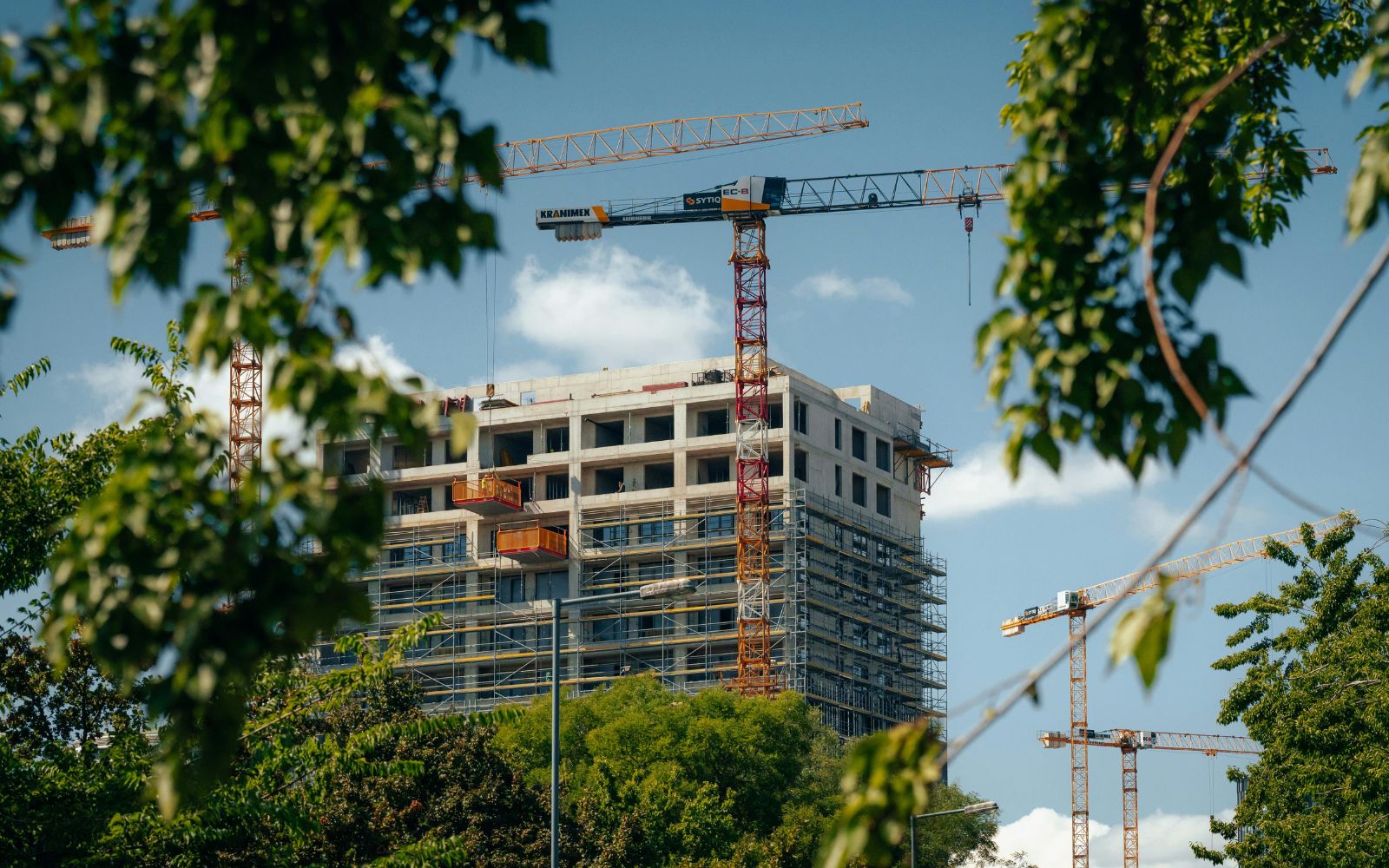
Most condo roofs don’t fail in one dramatic moment. What actually happens is slower, quieter, and frankly, easier to ignore. Small leaks show up, get patched, then come back somewhere else. Materials start to lose flexibility. Drainage gets inconsistent. So when people ask when does a condo building roof need to be fully replaced, they’re usually already dealing with symptoms. The real answer sits behind those symptoms: performance over time, not just visible damage. And in a shared building system, that distinction matters more than most people expect.
When Does a Condo Building Roof Need to Be Fully Replaced
Here’s the thing: there isn’t a single trigger that answers when does a condo building roof need to be fully replaced. It’s rarely one event. It’s a pattern. A full roof replacement becomes necessary when the system stops behaving like a system. That usually shows up in a few ways. Repairs don’t hold. Water finds new paths. Issues spread instead of staying contained.
At that stage, what looks like isolated problems is actually systemic failure. In large condo structures, the roof isn’t just a surface layer; it’s part of the building envelope. Once that envelope starts breaking down, repairs don’t restore performance. They just slow the decline. And that’s where many properties lose time and money.
How Long Does a Roof Last on a Condo Building?
People often ask how long a roof lasts on a house, but condo roofs don’t follow the same rules. They’re larger, flatter, and deal with different stress patterns. You’ll see manufacturers list optimistic numbers. Real-world performance tends to land somewhere below that.
| Roofing Material | Expected Lifespan | Real Condo Performance | What Usually Shortens It |
| TPO / PVC | 20–30 years | 15–25 years | seam failure, UV exposure |
| Modified Bitumen | 20–25 years | 15–20 years | expansion stress |
| Built-Up Roofing | 25–30 years | 20–25 years | standing water |
| Metal Systems | 40–60 years | 30–50 years | install quality |
According to the National Roofing Contractors Association, most low-slope systems fall in that 20-year range, depending on maintenance and environment. But here’s what doesn’t get talked about enough: A roof can reach the end of its functional life well before it reaches its material lifespan.
The Real Difference Between Condo Roofs and Residential Roofs
A condo roof isn’t just a bigger version of a house roof; it behaves differently under pressure, and that difference shows up in how problems develop.
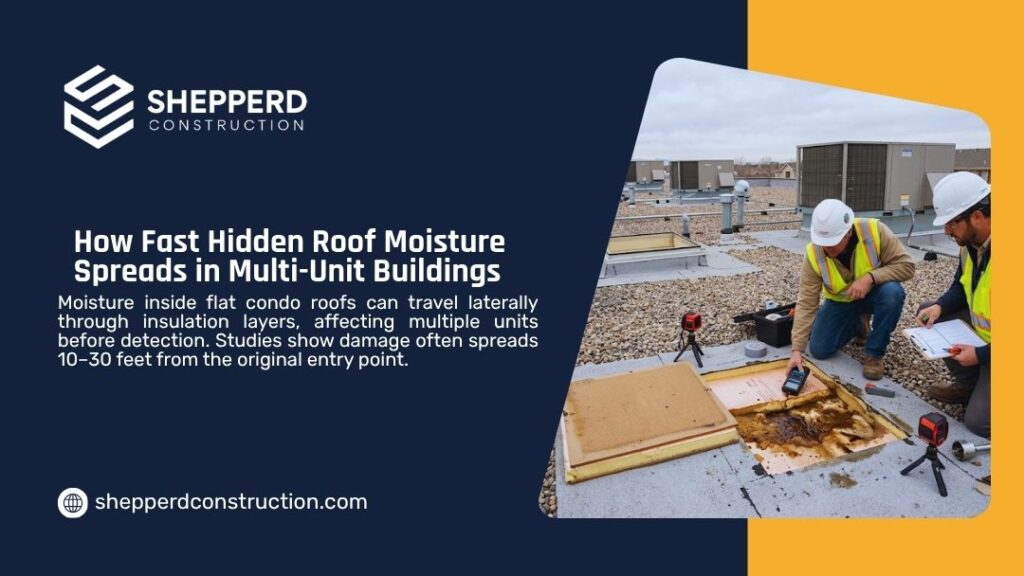
On a single-family home, water intrusion tends to stay localized. In a condo building, water rarely respects boundaries. It travels across membranes, moves through insulation layers, and often appears far from the original failure point.
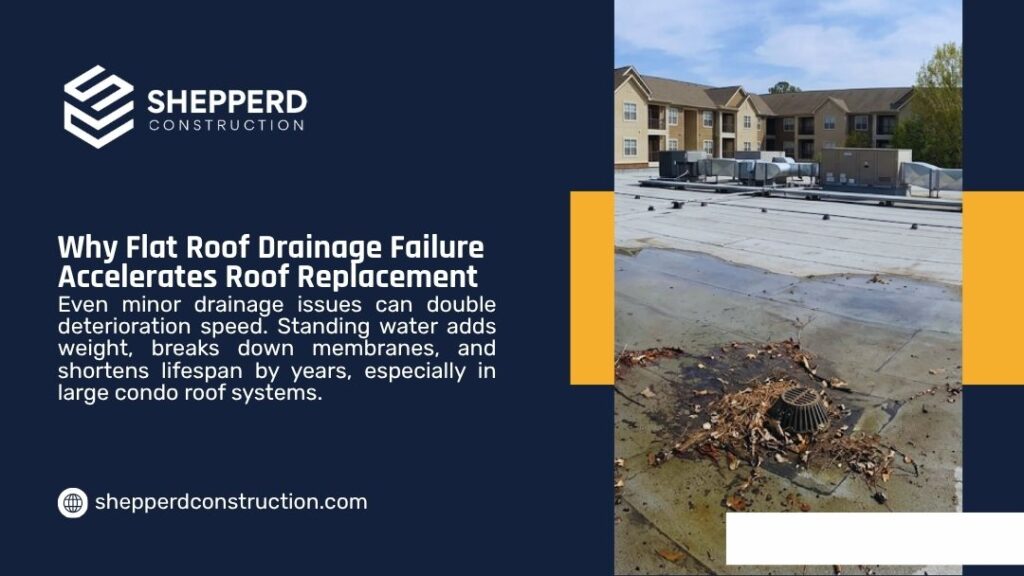
There’s also the structural side to consider. Many condo buildings use low-slope or flat roofing systems. These rely heavily on proper drainage design. When drainage begins to fail, even slightly, you start to see ponding, which accelerates deterioration in ways steep-slope residential roofs don’t experience.
The decision-making process is different, too. A homeowner can decide quickly. An HOA cannot. Budgets, reserve studies, approvals, and legal considerations all come into play.
| Factor | Residential Roof | Condo Roof |
| Drainage | gravity-driven slope | engineered drainage systems |
| Damage spread | usually localized | often widespread |
| Decision authority | individual owner | HOA / board |
| Repair flexibility | high | limited once systemic issues appear |
This is why the question of when to replace a roof becomes more complex in condo settings. It’s not just about condition, it’s about system performance and shared responsibility.
Warning Signs You Need a Full Roof Replacement (Not Just Repairs)
Most property managers don’t miss obvious damage. The harder part is recognizing when those issues are no longer isolated.
| What You See | What’s Actually Happening |
| Leaks in different units | Water is moving through the system |
| Ponding water | Drainage failure or structural sag |
| Repeated patch repairs | The system is no longer holding |
| Interior staining or mold | Long-term moisture intrusion |
| Membrane cracking | Material fatigue, nearing the end of life |
The EPA notes that mold can begin forming within 24–48 hours of moisture exposure. That’s why small leaks can turn into much bigger problems faster than expected.
Once these patterns start stacking, the conversation shifts away from roof repair vs replacement. At that point, you’re not choosing between options; you’re catching up to reality.
Roof Repair vs Replacement: How to Decide
This is where most hesitation happens. On paper, repairs look cheaper. In practice, they often cost more over time.
| Situation | What Usually Makes Sense |
| Single, isolated issue | repair |
| newer roof (under ~12–15 years) | repair |
| recurring leaks in multiple areas | replacement |
| structural or deck damage | replacement |
| rising maintenance costs | replacement |
If you’re already asking should I repair or replace the roof, it’s often because the roof has started to show a pattern of failure, not just a one-off issue. Many teams refer to guidance on when repair is no longer enough for a commercial building to better understand where that tipping point sits and how to plan the next steps accordingly.
What Happens If You Delay a Condo Roof Replacement?
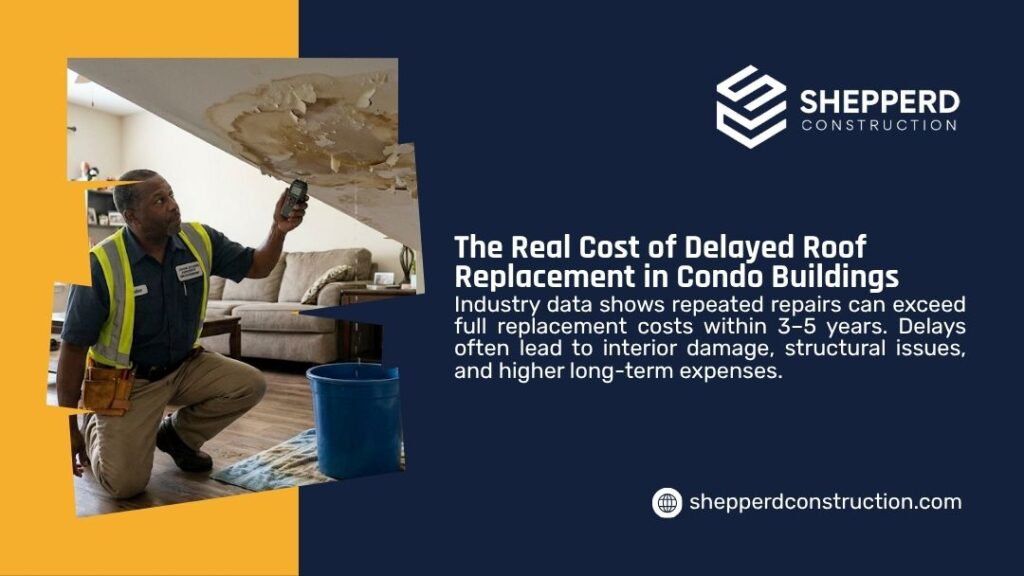
Delaying replacement doesn’t pause deterioration; it compounds it. In the early stages, water intrusion might affect insulation or surface layers. Over time, that same moisture starts working deeper. Fasteners corrode. Decking weakens. Interior assemblies begin to absorb moisture that they were never designed to handle.
What makes condo buildings particularly vulnerable is scale. One unresolved issue can affect multiple units, often without immediate visibility. By the time interior damage shows up, the problem has usually been active for a while.
There’s also a financial side that tends to get underestimated. Repeated repairs create fragmented spending. Each fix addresses symptoms, not the cause. Eventually, those accumulated costs exceed what a timely full roof replacement would have required.
In more advanced cases, delays can shift the scope from roofing into full reconstruction, especially when moisture intrusion begins to impact structural components. At that point, the situation aligns more closely with how to know if water damage requires reconstruction, rather than standard roof repair work.
The Role of Engineers in Condo Roof Replacement Decisions
In complex buildings, decisions around when does a condo building roof need to be fully replaced don’t rely on visual inspection alone. That’s where engineers come in.
A forensic engineer approaches the roof as part of a larger system. They evaluate how water moves through assemblies, how materials respond to stress, and whether underlying components are still performing as intended.
Testing methods often include moisture mapping, core sampling, and structural evaluation. These are not surface-level assessments. They’re designed to answer a specific question: is the system still viable, or has it reached the point where replacement is the only reliable option?
In projects tied to insurance or legal claims, engineering input becomes even more critical. Documentation must be precise. Findings must be defensible.
That level of detail is why many reconstruction decisions align with engineering assessment requirements for full reconstruction. It helps ensure that replacement choices are grounded in verified data rather than assumptions or short-term fixes.
Condo Roof Replacement Costs and What Drives Them
According to commercial roofing industry estimates, low-slope commercial roof replacement costs typically range from $4 to $15 per square foot, depending on material and complexity
For a condo building, that translates into significantly higher project totals due to scale, access logistics, and coordination requirements.
| Project Type | Typical Cost Range |
| Small residential roof | $5,000 – $15,000 |
| Commercial / condo roof | $7–$12 per sq. ft. (or more) |
What drives cost upward in condo environments isn’t just size. It’s access constraints, staging requirements, safety measures, and the need to work around occupied units.
So when evaluating roof replacement cost, it’s less about a single number and more about understanding the full scope of work. Several factors influence the final cost.
| Factor | Why It Matters |
| roof size | more material and labor |
| material type | affects lifespan and installation complexity |
| building access | impacts logistics and safety |
| structural repairs | adds scope beyond roofing |
| occupied conditions | slows work and increases coordination |
Best Time to Replace a Condo Roof
Timing a replacement project requires balancing weather patterns with project urgency. While ideal conditions help, waiting too long can introduce more risk than benefit.
| Season | Advantages | Considerations |
| Spring | moderate temperatures, stable conditions | Occasional storms |
| Summer | longer workdays | Extreme heat impacts materials |
| Fall | optimal installation conditions | Limited scheduling windows |
| Winter | fewer contractor backlogs | Weather variability |
Spring and fall tend to offer the most predictable conditions for roofing systems. That said, if the roof has already reached failure, delaying replacement to wait for ideal timing can lead to additional damage.
In practice, experienced teams plan around both climate and building condition, adjusting timelines based on urgency rather than preference alone. Teams working across regions like Austin, Dallas, and Fort Worth often plan projects around climate patterns to reduce risk during installation.
How HOA Boards and Property Managers Should Plan Roof Replacement
Planning a condo roof replacement requires more than identifying when the roof fails. It requires aligning technical findings with financial readiness.
Reserve studies provide a starting point, but they’re often based on estimated lifespans rather than actual performance. That’s why regular inspections and updated condition assessments are essential.
Communication plays a major role as well. Residents need to understand what’s happening, when work will occur, and how it may affect them. Without that clarity, even well-planned projects can face resistance.
From an operational standpoint, phasing becomes important in larger communities. Not every section needs to be addressed at once, depending on the condition. Strategic sequencing can help manage costs without compromising long-term performance.
For property managers dealing with these complexities, structured approaches, such as how to manage a reconstruction project as a property manager, provide practical direction for planning, coordination, and execution.
How to Tell If a Roof Needs to Be Replaced (Expert Perspective)
There isn’t a single indicator that answers how to know when to replace a roof. What experienced professionals look for is pattern recognition. Is the frequency of repairs increasing? Are issues appearing in multiple locations? Has the roof started to behave unpredictably during heavy rain? These signals point toward system-level decline rather than isolated failure.
Another factor often overlooked is performance consistency. A roof may appear intact but fail under certain conditions. That inconsistency is often an early indicator that the system is nearing the end of its functional life.
If you’re asking how you know if you need a new roof, the most reliable answer comes from combining visible signs with performance history, not just one or the other.
Choosing the Right Reconstruction Contractor for Condo Roof Replacement
Selecting a contractor for a condo project involves a different level of scrutiny. These projects require coordination with engineers, understanding of building-envelope systems, and the ability to manage logistics in occupied environments. It’s not just about installation, it’s about execution under constraints.
A contractor with reconstruction experience approaches the project differently. They understand how to interpret engineering reports, how to sequence work to minimize disruption, and how to address underlying issues, not just surface symptoms.
For property owners evaluating options, using a framework like how to vet a reconstruction contractor for a large commercial property helps clarify what to look for beyond basic qualifications, including experience with complex projects, compliance standards, and risk management practices.
When Does a Condo Building Roof Need to Be Fully Replaced
So, when does a condo building roof need to be fully replaced? It happens when the roof can no longer deliver consistent protection across the entire structure. Not just in isolated areas, but as a system.
That point is reached when repairs become reactive rather than preventative. When performance varies depending on weather conditions. When underlying components begin to show signs of deterioration.
In many cases, the shift is gradual. There isn’t a single moment where the roof fails. Instead, there’s a transition from manageable maintenance to ongoing instability.
Recognizing that transition early is what allows property owners to act before costs escalate further. And in large buildings, timing that decision correctly makes a measurable difference in both cost and long-term performance.
FAQs
How do you know if a condo roof needs to be replaced?
You know a condo roof needs replacement when problems repeat across multiple areas, repairs stop lasting, and water intrusion spreads beyond isolated sections.
Can a condo roof be repaired instead of replaced?
Yes, but only if the damage is isolated. Once issues become widespread, repairs usually provide short-term relief rather than long-term solutions.
What are the warning signs that you need a new roof?
Common signs include recurring leaks, ponding water, membrane cracks, interior water damage, and repeated repair history.
Who is responsible for condo roof replacement?
In most cases, the HOA is responsible for roof replacement, but responsibility can vary depending on governing documents.
How often should a condo roof be replaced?
There is no fixed schedule, but most buildings evaluate replacement between 20 and 30 years or earlier if performance declines.
What happens if you delay roof replacement?
Delays often lead to structural damage, mold, higher repair costs, and increased liability for property owners and associations.
What is the best time of year to replace a roof?
Spring and fall are generally preferred due to moderate weather, but urgent replacements should not be delayed for seasonal timing.
Take the Next Step With a Professional Evaluation
If your building has started showing signs of wear, waiting rarely improves the outcome. A proper evaluation, done by teams that understand reconstruction, not just roofing, can help clarify what’s actually happening beneath the surface.
Working with experienced professionals like those at Shepperd Construction means decisions are based on real conditions, not assumptions. And when it comes to something as critical as a building envelope, that difference matters more than most people realize.