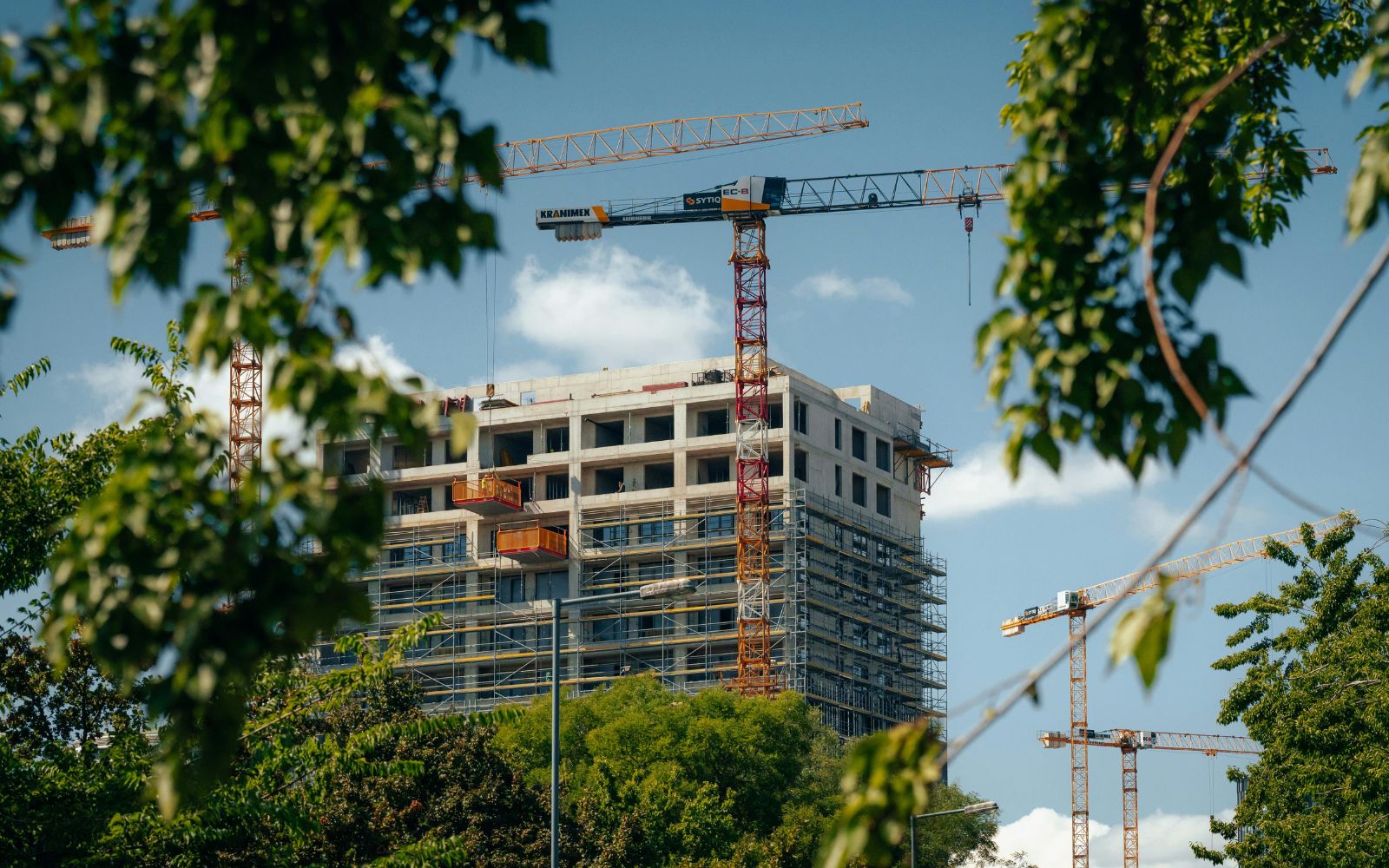
If you don’t verify insurance, safety history, financial stability, and true commercial reconstruction experience, you’re gambling with your asset. This guide explains how to vet a reconstruction contractor for a large commercial property with a focus on risk control, insurance verification, safety records, financial stability, and commercial experience. Property owners, HOA boards, engineers, and legal teams will find practical standards that reduce liability and protect long-term asset value.
How to Vet a Reconstruction Contractor for a Large Commercial Property
Choosing the right commercial contractor can make or break a project. That’s not dramatic language. It’s math. OSHA’s own data highlights how serious jobsite risk remains, and the stakes climb fast on big scopes, difficult access, and occupied properties.
When you’re deciding how to vet a reconstruction contractor for a large commercial property, you’re not just comparing bids. You’re evaluating liability exposure, tenant disruption, schedule risk, insurance implications, and the contractor’s ability to execute work that follows engineering direction without “creative interpretation.”
BLS injury and illness reporting shows just how tight safety controls must be across industries, including construction. That matters because safety discipline and operational discipline tend to travel together.
Commercial reconstruction is not the same thing as hiring a contractor for home renovation. It involves structural repairs, building envelope restoration, phasing plans for occupied areas, and strict documentation habits. In Texas, it can also involve weather-driven damage patterns that push waterproofing and exterior assemblies to their limits. NOAA’s billion-dollar disaster data for Texas makes that plain.
And here’s the problem: contractors are not created equal. Some are excellent at finishes. Some are reliable for small jobs. But a reconstruction contractor who can coordinate with forensic engineers, defect attorneys, property managers, and building owners operates under a different expectation set. If your project includes litigation sensitivity, this difference matters even more.
So the goal in vetting a reconstruction contractor for a large commercial property isn’t simply to find a good contractor or scroll best contractors near me until something looks convincing. The goal is to verify that the firm has commercial reconstruction expertise, strong general liability protection, workers’ compensation coverage, and a safety record that reflects controlled execution, every day, not just on bid day.
Commercial Reconstruction vs General Contracting: Contractors Are Not Created Equal
Many owners begin with broad searches such as best general contractors near me, how to find a contractor, or best commercial general contractors near me. Those searches can surface competent builders. They can also mix in firms that do fine work, just not the kind you need.
Commercial reconstruction addresses failed systems, not cosmetic surfaces. Before you shortlist anyone, it is worth sorting out restoration contractor versus reconstruction contractor roles so your search targets firms built for rebuild scopes. It may follow engineering reports, water intrusion findings, deferred maintenance realities, insurance review, or defect-related repair scopes. Accountability increases sharply, and the documentation trail needs to hold up under scrutiny.
Here’s a practical comparison that helps frame how to vet a reconstruction contractor for a large commercial property without guessing.
| Criteria | General Contracting (Typical) | Commercial Reconstruction |
| Primary scope | New build or interior remodel | Structural repair and building envelope restoration |
| Risk profile | Moderate | Higher, often liability-sensitive |
| Engineering involvement | Occasional | Frequent collaboration and scope alignment |
| Documentation | Standard contracts and logs | Detailed repair documentation and traceability |
| Occupied operations | Sometimes | Often essential, with phasing plans |
| Insurance scrutiny | Basic verification | Elevated verification and risk-transfer controls |
| Dispute sensitivity | Rare | More common when a failure history exists |
This difference matters because choosing the right commercial contractor can make or break asset performance. A remodeling contractor may be outstanding at interior refresh work, yet struggle with sequencing, moisture control detailing, or coordination with engineering teams.
If you want a quick benchmark for the reconstruction lane, look at a firm’s published scope descriptions and project types. For example, Shepherd’s overview of commercial reconstruction services makes it clear they frame work around reconstruction, restoration, testing, and complex repair execution rather than general remodeling language.

Start With Licensing, Liability Insurance, and workers’ compensation verification
Any serious discussion of vetting a reconstruction contractor for a large commercial property starts with insurance documentation, because the risk doesn’t disappear just because someone seems confident in a meeting.
A clean way to handle this is to treat insurance verification as a gate, not a checkbox. Request certificates, confirm limits, confirm effective dates, confirm named insured matches the contracting entity, and confirm subcontractor coverage expectations match your contract language. If you want the step-by-step mechanics behind that gate, our guide on how to verify a contractor’s license and insurance in Texas walks through which state databases to check and how to confirm a certificate directly with the carrier.
Here’s a verified expert Attorney General warning from a public authority that spells out why this step is non-negotiable:
“If a worker is injured, or damage is caused on your property, you could be held liable if your contractor does not have the required insurance.”
Texas Department of Insuance give similarly direct guidance on what verification should look like in real life:
Confirm that the roofer or contractor has workers’ compensation and general liability insurance. Ask for the roofer’s or contractor’s certificate of insurance. Call the insurance company to confirm that the policy is valid.
That call to the insurance company line is the part people skip, then regret later. Use this table as a baseline for what to request when deciding how to vet a reconstruction contractor for a large commercial property.
| Verification item | Baseline expectation for large commercial reconstruction | What you’re really protecting |
| General liability | Limits appropriate to asset size and exposure | Third-party injury/property claims |
| Workers compensation | Active policy that covers field staff and subs as required | Owner exposure from jobsite injuries |
| Umbrella/excess | Scales with project and property risk | Catastrophic loss scenarios |
| Additional insured language | Written into the contract and endorsed properly | Risk transfer that actually holds |
| Bonding capacity (if needed) | Verified via surety letter | Completion assurance and financial backing |
If a contractor delays paperwork, offers vague answers, or acts irritated by standard requests, treat it as a red flag. A reliable contractor expects this scrutiny and has a process for it.
Evaluate Safety Record and EMR Ratings
A contractor’s safety record tells you more than a portfolio slideshow ever will.
EMR (Experience Modification Rate) compares a contractor’s safety performance to industry norms. It’s not a magic number, but it’s a useful indicator when combined with OSHA logs, training systems, and site enforcement habits.
OSHA’s published statistics underscore why safety belongs in the core of how to vet a reconstruction contractor for a large commercial property, not as an afterthought.
BLS reporting on workplace injuries and illness rates reinforces the point: safety is measurable, and the best contractors track it with the same seriousness they track budgets.
A solid vetting conversation sounds like this: the contractor can explain who owns safety on-site, how the project manager enforces it, how incidents get reported, and how training stays current. A weak conversation sounds like “we’ve never had a problem” with no documentation behind it.
If you’re looking for a contractor, and you hear confident answers but receive slow proof, treat the delay as part of the data.
Analyze Experience With Similar Commercial Property Types
Reconstruction is context-specific. A contractor who performs well on retail tenant build-outs may not understand multifamily structural envelope failure. Experience alignment matters.
| Property Type | Relevant Reconstruction Experience Needed |
| Multifamily | Balcony repair, façade replacement, and waterproofing |
| Senior Living | Phased work in occupied environments |
| Student Housing | Fast turnaround with minimal disruption |
| Municipal | Public procurement compliance |
If you manage apartment communities, review specialists in reconstruction contractors for apartment complexes. If you oversee homeowner associations, examine reconstruction contractors for HOA communities. The closer the completed project profile aligns with your commercial property, the lower your risk exposure.
Investigate Financial Stability and Bonding Capacity
Financial stability rarely shows up in how to choose a contractor guide, yet it’s one of the fastest ways a large job goes sideways.
Commercial reconstruction requires cash flow control. Materials may require deposits. Specialty subcontractors may require predictable pay cycles. And schedule slips can create expensive carrying costs, especially on revenue-producing assets.
When deciding how to vet a reconstruction contractor for a large commercial property, ask how the contractor structures payment applications, how they manage subcontractor payment timing, and whether they can provide a surety letter when bonding is relevant. You’re not trying to interrogate; you’re trying to confirm the contractor can finish what they start without turning your project into a finance problem.
If a contractor pushes for unusually large upfront money without clear justification, or can’t explain how they handle subcontractor pay requests, that’s not hard-nosed business. It’s a risk.
Review Project Management Structure and Communication Protocols
Commercial reconstruction involves property managers, owners, tenants, and often engineers. Sometimes attorneys sit in the background as well. That coordination requires a project manager with authority, a reporting system, and a communication cadence that prevents surprises.
Ask how documentation works in day-to-day practice. Who issues daily logs? How does the team handle change order pricing, approvals, and schedule impact? How do tenant notices work? How does the contractor respond when engineering direction evolves after field exposure?
This section is where good contractors and reliable contractors stop being vibes and start being systems.
If you want a regional lens in Texas, compare how contractors speak to local scope realities and stakeholder needs. Review Reconstruction Contractors Austin can help you evaluate whether a firm addresses commercial reconstruction as an engineered process rather than a loosely managed jobsite.
Check References the Right Way
Most people check references the way they check restaurant reviews: quickly, politely, and mostly useless.
If you’re serious about how to vet a reconstruction contractor for a large commercial property, reference checks should feel like structured due diligence. Contractors will naturally provide their happiest clients. That’s fine. Your job is to ask questions that reveal operational truth.
Ask whether final costs stayed aligned with the original scope and why any change orders occurred. Ask how change orders were documented. Ask whether schedule updates were proactive or reactive. Ask whether communication stayed consistent during messy phases. Ask whether safety enforcement was visible. Ask whether disputes occurred and how they were resolved.
Then listen for specifics. Strong references recall details, scope milestones, reporting cadence, and project manager behavior. Weak references rely on vague praise like they were great, without examples.
If you can, request permission to visit a completed project or speak with someone who managed the property during construction. Owners who do this step well usually avoid the expensive kind of surprises.
Red Flags That Signal You Should Walk Away
A lot of bad decisions happen because someone wants a fast start. Speed has value, sure, but not at the expense of verification. Not all warning signs appear obvious at first glance.
| Red Flag | Risk Implication |
| Incomplete insurance paperwork | Potential liability exposure |
| Unusually low bid | Possible underestimation or scope gap |
| No written safety program | Elevated injury and delay risk |
| Poor contractor review patterns | Reputation instability |
| Reluctance to provide EMR | Hidden safety issues |
If you see an unusually low bid, don’t assume you found a bargain. Assume you found a gap, then go hunt for it. On large commercial reconstruction, scope gaps become budget spikes later.
If you see poor contractor reviews, don’t stop at the rating. Read the pattern. Complaints about communication, surprises, change orders, and warranty response matter more than complaints about “dust.”
Use Contractor Review Sites Carefully
Online contractor review websites provide surface-level insight. However, commercial reconstruction rarely appears on residential review platforms. Sites listing best general contractors near me or best remodeling contractors near me often prioritize homeowner experiences, not multifamily structural remediation.
Better research methods include state licensing databases, commercial case studies, insurance carrier relationships, and engineer referrals.
Finding a general contractor through review platforms can work for small jobs. Large commercial property reconstruction demands deeper diligence.
How to Vet a Reconstruction Contractor for a Large Commercial Property in Texas
Texas has its own reality. Heat, humidity, wind-driven rain, and storm cycles punish building envelopes. NOAA’s state summary shows Texas has experienced a high count of billion-dollar weather and climate disasters over the decades, and the recent five-year average stands out sharply.
That climate pressure makes waterproofing, façade transitions, window and door perimeters, and roof-to-wall intersections more than details. They’re durability points.
So when owners ask how to vet a reconstruction contractor for a large commercial property in Texas, the right answer includes climate fluency. Ask what the contractor has rebuilt in similar exposure conditions. Ask how they address water management, not just water damage. Ask how they coordinate with engineers when field conditions reveal hidden moisture paths.
If your asset spans multiple metros, review a firm’s broader coverage and operational consistency across the state. Shepperd’s Texas reconstruction service footprint is one way to check whether a contractor is built for statewide commercial execution rather than one-off local jobs.
Questions Every Property Owner Should Ask Before Hiring
When evaluating how to vet a reconstruction contractor for a large commercial property, decision-makers often want fast clarity. Before running the checklist, it helps to understand how preferred vendors differ from independent reconstruction contractors, because a carrier-referred firm and an owner-hired firm carry different incentives into the same scope. The table below distills the most critical vetting questions into measurable checkpoints that protect asset value and reduce liability exposure. Beyond these documentation checkpoints, a broader pre-hire vetting checklist walks through the process, supervision, and change-order questions that surface during contractor interviews.
| What to Ask | Why It Matters | What You Should See |
| What is your current EMR rating? | Safety record directly impacts risk and insurance exposure | EMR below 1.0 with documentation |
| Can you provide certificates for general liability and workers’ compensation? | Protects ownership from financial claims | Coverage limits aligned with commercial scale |
| What is your bonding capacity? | Confirms financial strength for large scopes | Letter from surety verifying capacity |
| How many similar commercial reconstruction projects have you completed? | Experience alignment reduces execution errors | Verifiable portfolio with comparable assets |
| Who will be the assigned project manager? | Leadership structure determines project control | Named an individual with commercial experience |
| How do you manage phased work in occupied properties? | Minimizes tenant disruption and revenue loss | Written phasing and communication plan |
| How are change orders documented and approved? | Controls budget creep | Formal written change authorization process |
| Can we review a recently completed project? | Validates quality and attention to detail | Site visit or detailed case study access |
| What warranty applies to structural or envelope work? | Defines long-term protection | Written workmanship warranty terms |
| How do you coordinate with engineers during reconstruction? | Ensures technical accuracy | Clear integration process and reporting standards |
For deeper due diligence, property owners may expand this checklist into a weighted evaluation system. Below is a structured scoring matrix that allows side-by-side contractor comparison without guesswork.
Commercial Reconstruction Contractor Evaluation Matrix
| Evaluation Category | Weight (%) | Contractor A Score | Contractor B Score | Notes |
| Safety Record & EMR | 20 | |||
| Insurance Coverage | 15 | |||
| Financial Stability | 15 | |||
| Relevant Commercial Experience | 20 | |||
| Project Management Structure | 15 | |||
| Communication & Reporting | 10 | |||
| Warranty & Post-Completion Support | 5 |
Using a structured matrix like this removes subjectivity from the hiring process. It reinforces discipline in how to vet a reconstruction contractor for a large commercial property and ensures that decisions are based on measurable criteria rather than personality or lowest bid.
Commercial reconstruction affects long-term asset stability. A skim-friendly framework allows owners, asset managers, and board members to evaluate contractors with clarity while maintaining professional standards. And that’s where informed selection replaces uncertainty.
When Is Repair Not Enough for a Commercial Building?
The table below provides a fast-reference framework for determining whether a commercial property requires targeted repair or full reconstruction. This overview avoids repetition and focuses strictly on decision triggers.
| Condition Observed | What It Suggests | Recommended Action |
| Recurring leaks in the same building section | Systemic envelope failure rather than an isolated defect | Conduct invasive testing and engineering review |
| Structural framing shows rot, corrosion, or deflection | Load-bearing elements may be compromised | Structural reconstruction under an engineered plan |
| Widespread cracking across the façade or balconies | Movement, installation defect, or substrate failure | Comprehensive envelope assessment |
| Multiple prior repair attempts with a short lifespan | Root cause remains unresolved | Lifecycle cost analysis for full reconstruction |
| Moisture detected behind cladding during inspection | Hidden deterioration within the wall assembly | Partial or full wall system reconstruction |
| Insurance carrier requests engineering documentation | Risk classification may exceed cosmetic repair | Align reconstruction scope with report findings |
| Code compliance gaps identified during review | The existing system fails to meet current standards | Upgrade through structured reconstruction |
| Tenant disruption from repeated maintenance | Ongoing operational inefficiency | Phased reconstruction plan to stabilize the system |
This format allows property managers, asset owners, and legal teams to assess severity quickly without revisiting prior explanations.
Making the Right Decision With Confidence
By now, you understand how to vet a reconstruction contractor for a large commercial property through licensing verification, insurance validation, safety review, financial assessment, experience alignment, and structured communication standards.
This process demands patience. But here’s what happens when due diligence is skipped. Delays multiply. Change orders escalate. Liability exposure grows. Tenant disruption extends. Selecting a reliable contractor with proven reconstruction experience protects asset value and operational continuity.
If you need a commercial reconstruction partner with documented expertise across Texas markets, explore Shepperd Construction’s areas of service or review completed projects to evaluate experience alignment before making your decision.
And when you’re ready to move forward, contact the team directly to discuss your commercial property needs with clarity and accountability. That’s how it works. That’s why it matters.