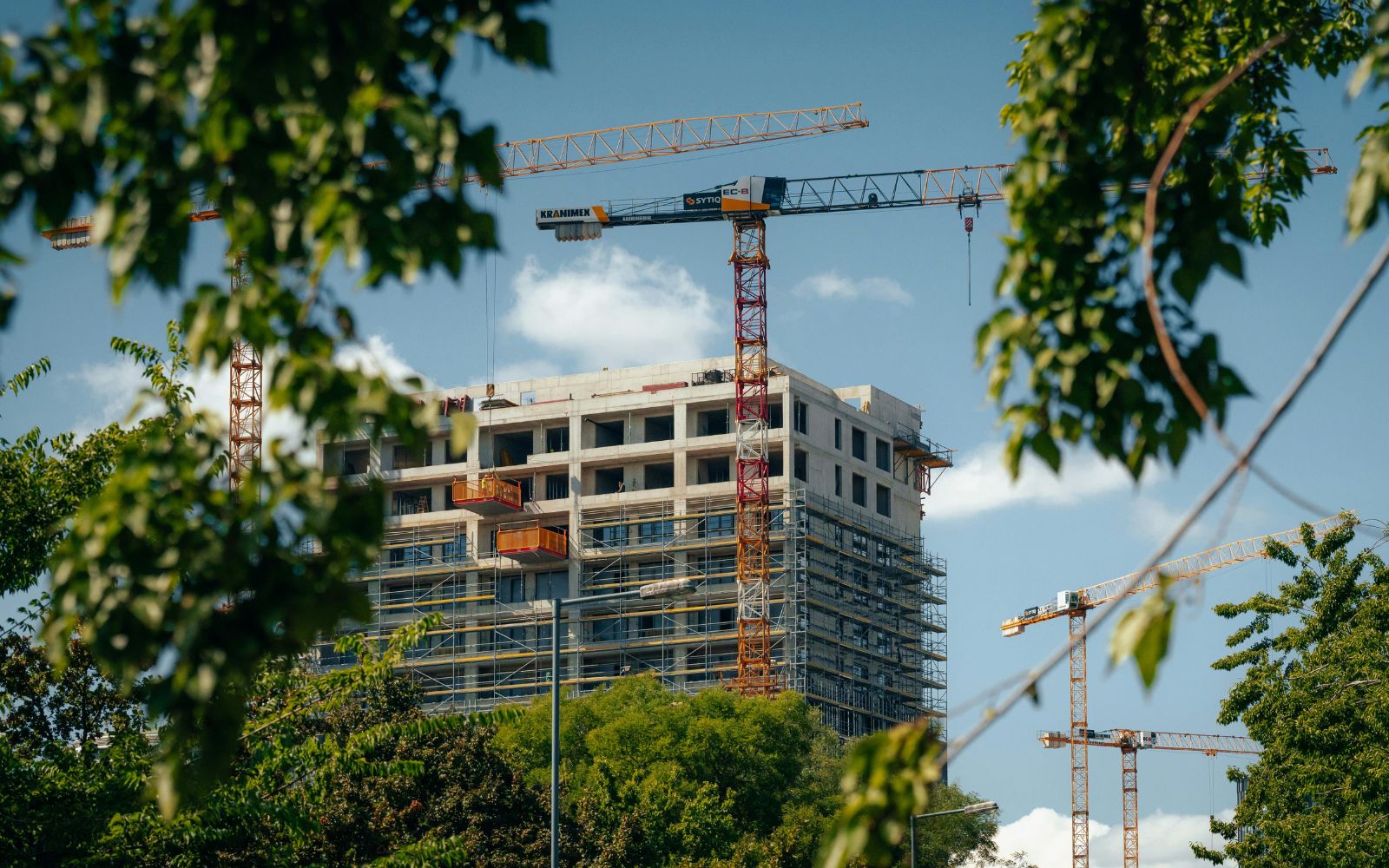
When an HOA is staring down structural deterioration, water intrusion, exterior envelope failure, or a major reconstruction job, picking the contractor matters more than most boards realize going in. One bad call can stretch into years of follow-up repairs, frustrated residents, legal exposure, and reserve funds bleeding faster than anyone planned for.
The right reconstruction contractor doesn’t just fix what’s broken. They protect the long-term value of the property, work cleanly with the engineering team, keep residents in the loop, and help the association avoid the kind of repeat failures that quietly drain reserves over a decade.
That’s the whole reason figuring out how to choose a reconstruction contractor for an HOA matters before contracts get signed and crews show up on-site.
How to Choose a Reconstruction Contractor for an HOA
Most HOA board members aren’t construction experts. They’re volunteers, neighbors, professionals from other industries, retirees who somehow ended up responsible for protecting a shared asset worth millions of dollars. That responsibility gets a lot harder once reconstruction enters the picture.
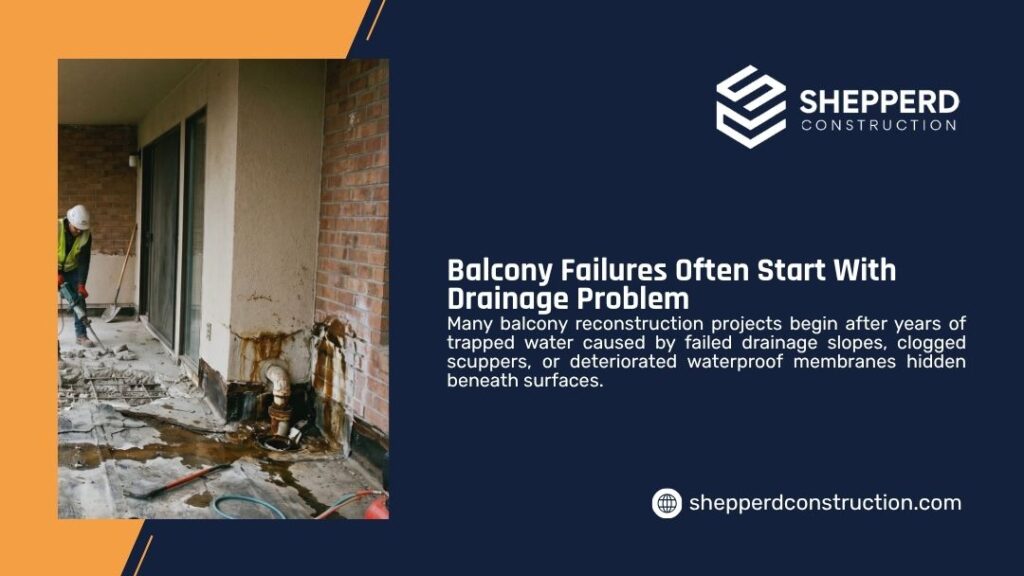
Reconstruction isn’t a kitchen remodel or a paint refresh. It usually involves active water intrusion, structural problems, aging infrastructure, balcony failures, damaged cladding, roofing breakdown, or construction defects that have been quietly compounding for years. Before interviewing contractors, it helps for boards to understand the cost drivers behind balcony reconstruction so they can tell a realistic bid from an optimistic one. The contractor handling that kind of work has to understand building science, sequencing, resident logistics, and long-term performance, not just how to swing a hammer and hit a deadline.
Plenty of associations miss that distinction. They treat reconstruction like a normal renovation, line up the bids, pick the lowest number, and cross their fingers. Here’s what tends to happen next.
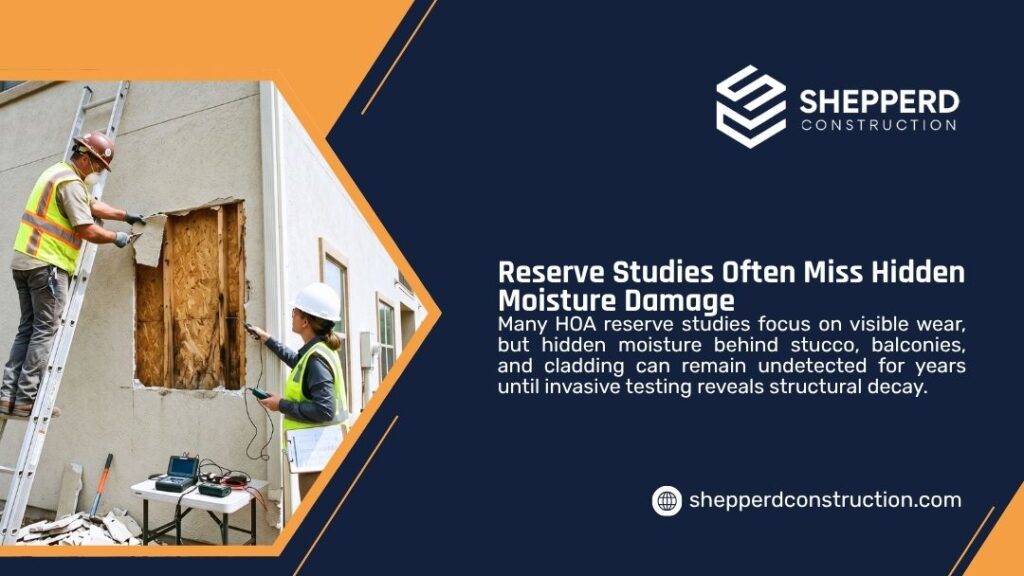
Reconstruction rarely follows a clean path. Once exterior systems open up, the hidden stuff comes out. Waterproofing layers turn out to be shot. Framing damage shows up where nobody expected it. Drainage paths have collapsed. Suddenly, the cheapest proposal becomes the single most expensive decision the board has made in a decade.
The safer path? Evaluate qualified contractors on technical experience, communication, project history, and their ability to manage occupied multifamily properties without burning everything down in the process.A lot of associations across Texas now lean on specialized HOA reconstruction specialists for exactly this reason; these projects need more than ordinary contracting chops.
Understand the Difference Between Reconstruction and General Contracting
One of the bigger mistakes boards make is assuming any contractor can step into reconstruction work.
General contractors handle tenant buildouts, office interiors, retail renovations, and small remodels, and many of them do that work very well. Reconstruction is a different animal. Boards evaluating bids should first review how a reconstruction contractor differs from a restoration contractor, because the two roles are frequently confused during a loss. It pulls in deteriorated envelope systems, invasive demolition, waterproofing integration, drainage correction, and structural remediation. That’s a technical skill set most standard contractors simply haven’t built.
A contractor with real reconstruction experience knows how water moves through wall systems, how a failed flashing detail eventually compromises framing, and why exterior systems have to function as a complete assembly instead of a set of disconnected fixes.
That experience matters even more in multifamily communities where residents stay on-site through construction. Noise control, staging, safety barriers, parking, and daily communication all of it shapes whether the project ends well or ends in a lawsuit.
Communities tackling large-scale exterior rehab tend to gravitate toward firms that specialize in commercial reconstruction services, because those contractors already speak the language of occupied-building logistics and phased sequencing.
You can usually tell which is which a few years after the work wraps. Poorly executed repairs almost always fail again, because nobody actually addressed why the original system failed in the first place.
Start With a Detailed Scope of Work
Before any contractor puts pricing on paper, the HOA should have a detailed scope of work in hand, written by qualified professionals, not pulled together from a handful of contractor walk-throughs. Without a defined scope, bids end up apples-to-oranges, important repairs get missed, and the comparison stops being useful.
For most reconstruction projects, the scope grows out of engineering assessments, reserve studies, invasive testing, or forensic investigations. Foundation work is a good example of why that sequence matters, since how foundation damage reconstruction is scoped in an apartment complex depends entirely on what soil testing and structural evaluation reveal first. Those documents tell you what’s actually failing inside the envelope and let contractors respond with proposals that match reality.
A vague scope creates confusion. A detailed one creates accountability.
| Scope Element | Why It Matters | Risk If Ignored |
| Waterproofing details | Prevents recurring leaks | Repeated water intrusion |
| Structural findings | Protects resident safety | Hidden deterioration |
| Material specifications | Improves durability | Premature system failure |
| Drainage corrections | Controls moisture movement | Ongoing envelope damage |
| Sequencing requirements | Maintains project flow | Delays and cost overruns |
Associations dealing with widespread deterioration usually rely on engineering assessments for reconstruction before contractor selection even begins.
Verify Licenses, Insurance, and Reconstruction Experience
Every HOA board should run the basics, licensing, insurance coverage, bonding capacity, and project history before signing anything. Boards that aren’t sure where to start can follow our walkthrough on verifying a reconstruction contractor’s license and insurance in Texas before a major repair, which covers the exact records to pull and the red flags that should stop a signature. Sounds obvious. It still gets skipped. Plenty of boards focus so hard on proposal pricing that the risk side of the equation barely gets a look. Qualified contractors should carry:
| Requirement | Why It Protects the HOA |
| General liability insurance | Reduces exposure from property damage |
| Workers’ compensation | Limits liability from on-site injuries |
| Bonding capacity | Demonstrates financial stability |
| Reconstruction project history | Confirms technical capability |
| Multifamily experience | Improves resident coordination |
Credentials alone don’t tell you enough, though. Boards need to look at whether the contractor has actually completed projects similar in size, complexity, and occupancy to what’s coming. A contractor doing single-family remodels can absolutely struggle on a 200-unit occupied condo reconstruction. The learning curve doesn’t disappear; it just gets billed to the HOA.
The Community Associations Institute has flagged deferred maintenance and improper repairs as two of the largest contributors to long-term association expenses. Communities that postpone repairs tend to face significantly higher costs later, because deterioration accelerates and emergency remediation almost always costs more than planned work. Contractor experience keeps mattering long after the ribbon-cutting photos go up.
Evaluate Their Experience With HOA and Multifamily Projects
Reconstruction inside an occupied community needs patience, structure, and constant communication. Residents still need to park their cars, use the stairs, get to their balconies, walk through the entrance, and use shared spaces. Property managers still field calls. Board members still answer questions in the elevator and at the mailboxes. The work doesn’t pause for any of that.
A contractor who hasn’t done multifamily reconstruction can create real chaos without meaning to. Experienced reconstruction teams know how to phase the work, communicate with residents, keep disruption manageable, maintain safety access, handle weather delays, and coordinate inspections without turning the schedule into a wreck.
Boards planning exterior rehab usually look hard for contractors with direct experience in multifamily condo reconstruction and apartment reconstruction projects; those environments demand a different operational rhythm than commercial or residential work.
One thing boards underestimate: residents judge the HOA during reconstruction, even when the contractor is the one causing the problem. A communication failure becomes a leadership failure pretty quickly.
Ask About Construction Defect and Litigation Experience
Not every reconstruction project involves litigation. Plenty of large envelope failures do, though, and when they do, documentation becomes everything. Contractors working alongside forensic engineers and attorneys need to understand:
- Investigative procedures
- Destructive testing coordination
- Repair documentation
- Sequencing records
- Cost-of-repair reporting
- Chain-of-custody requirements
This is one of the clearest places where specialized reconstruction contractors separate themselves from ordinary builders.
For HOA boards, litigation-sensitive projects carry serious financial stakes. Sloppy documentation can complicate insurance claims, push back settlements, or weaken the association’s legal position when it matters most.
Boards trying to figure out where their damage actually came from usually benefit from understanding the difference between construction defect vs storm damage, because who’s responsible, and who pays, can shift completely depending on the cause.
Contractors with real reconstruction and defect experience tend to coordinate more cleanly with engineers, consultants, and property managers across the entire lifecycle of the project.
Review Past Projects Carefully
Every contractor has a folder of photographs. That alone proves almost nothing. HOA boards should ask deeper questions:
- Was the property occupied during construction?
- Did the project involve waterproofing failures?
- How did the contractor handle resident communication?
- Did the timeline hold?
- Are the repairs still performing five years later?
- How many change orders showed up along the way?
Past performance reveals patterns. A contractor with serious reconstruction depth should be able to show before-and-after documentation, complex exterior repairs, multifamily projects, structural rehab work, envelope restoration, and long-term client relationships that didn’t end after a single job.
Communities reviewing capabilities often spend time looking through recent reconstruction projects to get a feel for the firm’s depth and how complicated the work has actually been. The thing is, long-term performance matters infinitely more than polished marketing photos. A picture of a freshly painted wall doesn’t tell you whether that wall is still dry three winters later.
Communication Can Make or Break an HOA Reconstruction Project
Most reconstruction disputes start with communication breakdowns. Not technical issues. Not budget issues. Communication.
Residents get frustrated when schedules shift without notice, access restrictions appear out of nowhere, noise spikes without warning, timelines stay vague, and management seems out of the loop.
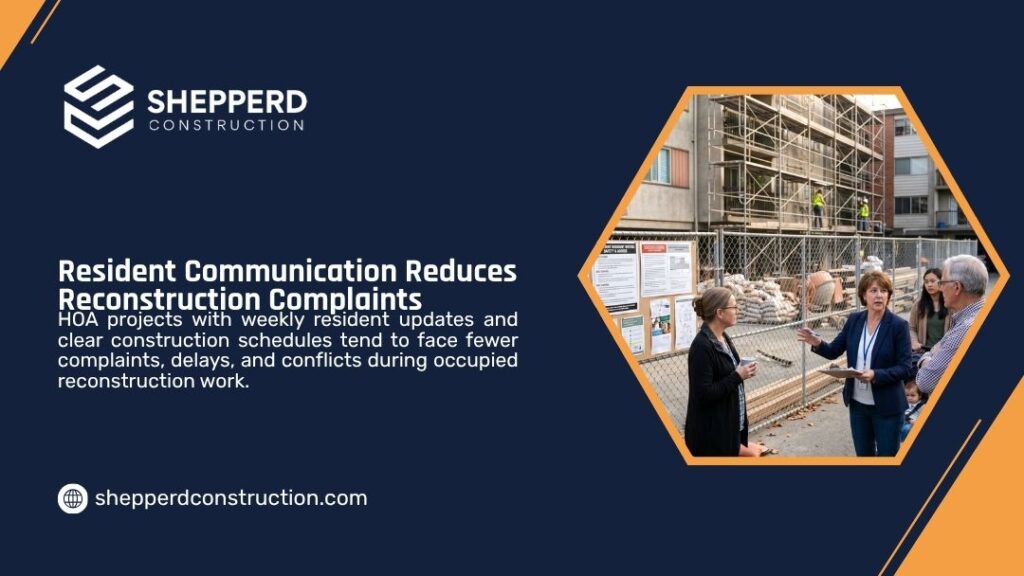
Strong reconstruction contractors keep communication consistent because occupied work demands transparency. The good firms put real systems in place, weekly reporting, resident notifications, change-order tracking, emergency response procedures, and dedicated project contacts.
That structure matters more in larger communities where reconstruction can stretch across a year or longer. Boards that prioritize organized communication often adopt strategies aligned with managing reconstruction as a property manager.
Good communication reduces friction. Great communication protects trust. And once trust is gone in an HOA, it rarely comes back during the same project.
Don’t Choose Based on Price Alone
Low bids get attention because reconstruction is expensive and boards have a fiduciary duty to control costs. That instinct is reasonable. The problem is that reconstruction pricing rarely tells the full story.
Some contractors land at the bottom of the bid stack by trimming waterproofing scope, excluding hidden conditions from the proposal, cutting back on supervision, spec’ing cheaper materials, underestimating labor hours, and limiting warranty exposure. That keeps the upfront number low. It also tends to push long-term costs through the roof.
| Low-Bid Contractor | Qualified Reconstruction Contractor |
| Focuses on the lowest number | Focuses on long-term performance |
| Limited reconstruction experience | Specialized reconstruction background |
| Minimal project planning | Detailed sequencing and oversight |
| Reactive communication | Proactive resident coordination |
| Higher risk of recurring failures | Greater durability and accountability |
The lowest proposal often becomes the most expensive repair cycle three or four years out. Boards focused on long-term asset preservation usually conclude that qualified contractors matter more than discounted pricing.
Questions HOA Boards Should Ask Before Hiring a Reconstruction Contractor
During interviews, board members should spend less time on sales presentations and more time on operational capability.
Useful questions get into reconstruction experience, project staffing, communication structure, engineering coordination, warranty procedures, change-order management, and occupied-property logistics.
A serious contractor should be able to walk you through how they handle unforeseen conditions, because reconstruction almost always uncovers something nobody saw coming once systems open up. If your board wants those interview questions laid out in order, we put together a hiring checklist for HOA boards that covers staffing, warranties, change orders, and occupied-property logistics.
Boards should also ask whether the contractor has worked alongside forensic engineers, consultants, and property managers before. Teams that already have that coordination dialed in tend to avoid most of the conflicts that derail reconstruction projects.
Why Long-Term Planning Matters More Than Fast Repairs
Short-term fixes tend to create long-term problems. That gets painfully obvious when associations keep patching the same leaks, balconies, roofing systems, or cladding without ever getting to the root cause.
Reconstruction should buy the property a decade, not push another emergency back six months. Long-term planning helps HOA boards:
- Preserve reserve funds
- Reduce recurring maintenance
- Improve property value
- Lower future liability exposure
- Stabilize insurance risk
Plenty of associations come to terms with the fact that repair is no longer enough once the same failures keep coming back despite repeated patchwork. When that realization lands, the conversation shifts from What costs less today? to What protects this property for the next decade? That shift changes everything that follows it.
Texas HOA Reconstruction Challenges Most Boards Overlook
Texas properties take a beating from environmental conditions that wear out exterior systems faster than most board members expect. Heat expansion, UV exposure, severe storms, wind-driven rain, humidity swings, and prolonged moisture exposure all stack stress on the building envelope.
Multifamily communities built during rapid-development waves often start showing aging waterproofing, flashing problems, drainage failures, and balcony deterioration on roughly the same timeline.
The numbers reinforce what reconstruction contractors already see in the field. Insurance pressure compounds the timing problem. Texas property insurance premiums have climbed sharply since 2019, and commercial multifamily premiums have tracked the same direction as carriers reprice exposure to hail, wind, and water-related claims. For HOAs, that shows up as higher master policy premiums, larger deductibles, and tougher scrutiny on every water claim that hits the desk.
Construction costs haven’t backed off either. According to the Associated General Contractors of America, construction firms continue facing elevated material costs and persistent labor shortages several years after the pandemic-era spikes. AGC’s 2024 construction outlook noted that contractors still struggle with higher input costs, supply-chain instability, and difficulty filling skilled craft positions across the construction industry.
Put it together, and the picture is clear: an aging multifamily inventory, harder insurance, sustained material costs, and a thin labor pool, all converging at once. That’s the market every Texas HOA board is making contractor decisions within.
That’s also why a lot of associations look for regional expertise from contractors who already understand Central Texas climate conditions, North Texas storm exposure, multifamily envelope failures, and how Texas insurance carriers actually evaluate reconstruction claims.
Communities looking for local reconstruction expertise often review contractors serving Austin, Dallas, Fort Worth, and San Antonio, because regional conditions shape reconstruction strategy in ways national contractors often miss.
What a Reliable Reconstruction Partner Looks Like
Reliable reconstruction contractors share a handful of traits. They communicate clearly. They understand building-envelope systems. They coordinate cleanly with engineers and consultants. They document everything. They approach reconstruction with patience instead of trying to crash production schedules.
Most importantly, they understand that reconstruction projects affect actual communities. Real people, real homes, real lives, not just buildings on a drawing. Firms focused heavily on reconstruction tend to prioritize technical expertise, long-term relationships, project transparency, quality control, client care, and accountability over short-term volume.
That relationship-driven approach is the reason experienced reconstruction firms keep working with the same attorneys, engineers, property managers, and building owners across multiple projects and years.
Associations evaluating depth often review information about Shepperd Construction’s background and experience and the broader reconstruction services across Texas before greenlighting large-scale work.
The Right Reconstruction Decision Pays Off Long After Construction Ends
HOA reconstruction projects rarely get easier once visible damage starts spreading. Water intrusion, structural deterioration, and exterior envelope failures tend to accelerate quietly in the background while repair costs continue climbing. That’s why choosing the right reconstruction contractor matters far beyond the initial proposal.
The contractors who protect communities long term are usually the ones who understand occupied multifamily reconstruction, communicate clearly when conditions change, and approach every project with technical discipline instead of shortcuts.
For HOA boards, property managers, and ownership groups across Texas, Shepperd Construction brings more than construction experience alone. The team works closely with engineers, consultants, attorneys, and community stakeholders to help properties navigate complex reconstruction challenges with clarity, accountability, and long-term performance in mind.If your community is dealing with recurring leaks, balcony concerns, building-envelope deterioration, or large-scale exterior repairs, now is the time to start the conversation. Contact the Shepperd Construction team to discuss your property, your concerns, and the reconstruction strategy that makes sense for the long-term health of your community.