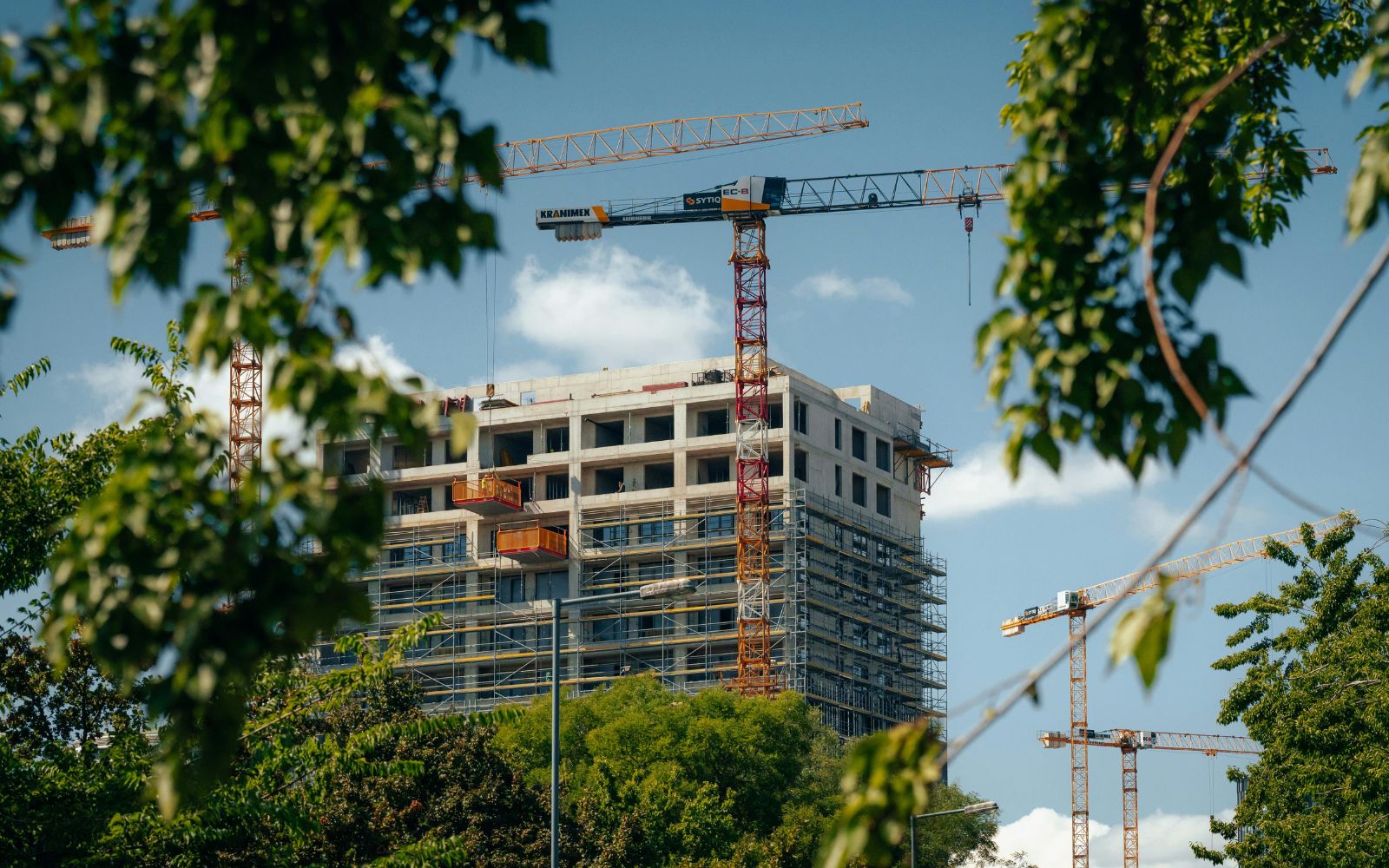
Mold remediation can solve a contained contamination problem. Full building reconstruction becomes a different conversation. It may be needed when water damage, mold growth, failed waterproofing, or structural decay has affected the materials that protect the property.
In this article, we explore what triggers the shift from mold remediation to full building reconstruction and how Texas property owners, HOA boards, property managers, forensic engineers, and construction defect attorneys can make a better repair decision.
Mold Remediation vs Full Building Reconstruction What Triggers It
Mold remediation vs full building reconstruction what triggers it depends on one central issue: whether the problem is limited to contamination or tied to a larger building failure.
A small patch of mold on a non-structural surface may call for remediation, especially if the moisture source has already been corrected. That is a cleanup and containment issue. But if the affected area includes saturated drywall, wet insulation, failed roofing, damaged sheathing, compromised stucco, balcony leaks, decayed framing, or repeated water intrusion, the project can move into reconstruction.
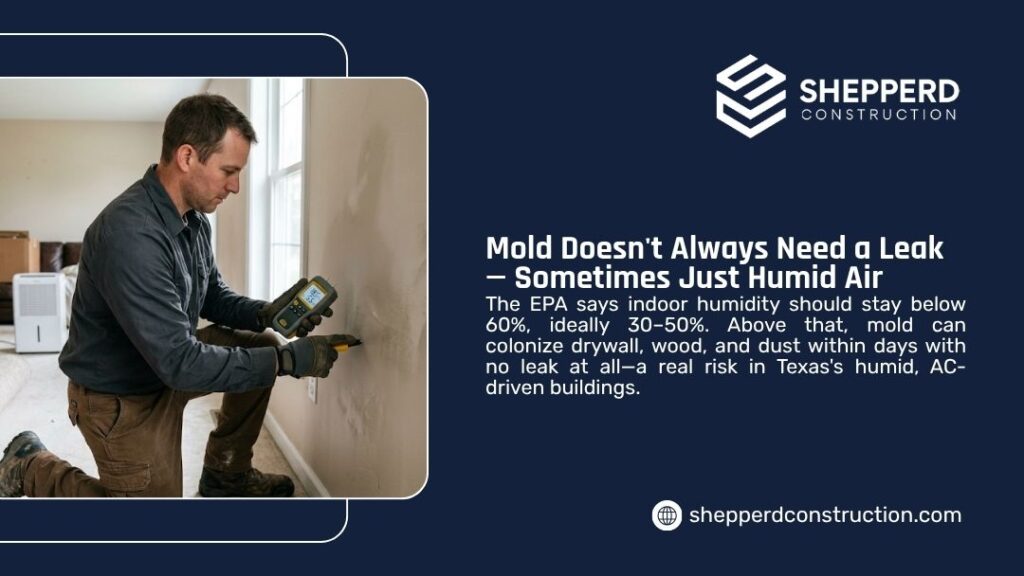
That difference matters. Mold is often the symptom people notice first, not the actual source of the problem. A stain on drywall may trace back to a roof leak. A musty odor inside a condo wall may point to failed flashing. Mold near a window may mean the wall system has held excess moisture for months. Cleaning the surface may improve the appearance, but it will not return the property to a safe, durable, pre-loss condition if the building system still lets water in.
For Shepperd Construction, this is where reconstruction work separates itself from basic mold cleanup. The company works across Texas on complex reconstruction projects involving building envelope issues, structural repairs, waterproofing failures, aging infrastructure, and post-litigation construction defect repair. These projects often involve forensic engineers, defect attorneys, property managers, building owners, and HOA communities, which means the repair scope has to be clear, careful, and built around long-term performance.
What Is Mold Remediation in Construction?
Mold remediation is the controlled process of addressing mold damage and the conditions that allowed it to develop. It is not the same as wiping down a wall, painting over a stain, or spraying a product and hoping the problem stays gone.
In a proper remediation project, the affected area is evaluated, moisture sources are identified, containment may be used, mold-infested materials are removed where needed, air movement is managed, and surfaces are cleaned or dried based on the material and the extent of damage.
In construction, remediation has a wider meaning. When someone asks what remediation in construction is, they are usually asking how a contractor corrects a harmful or defective condition in a property. That condition may involve contamination, water intrusion, mold growth, unsafe materials, damaged assemblies, or a failed system. Mold damage remediation fits within that broader category.
The U.S. Environmental Protection Agency makes timing a key part of the conversation. EPA guidance for schools and commercial buildings says response to clean water damage should happen within “24-48 hours” to help avoid the need for mold remediation.
That 48-hour window is useful, but it is not a guarantee. A wall can stay wet long after the floor looks dry. Water can travel behind baseboards, under flooring, into insulation, through sheathing, and around window openings. In Texas buildings, especially multifamily properties, HOA communities, commercial assets, and older structures, moisture can sit inside wall cavities and exterior envelope systems before anyone sees indoor mold.
That is why water damage and mold remediation should start with a practical question: where did the moisture come from, and has that source been corrected for good?
What Does Water Restoration Mean Before Reconstruction Starts?
Water restoration means work that brings a property back toward its pre-loss condition after water damage. It may include extraction, drying, cleanup, odor control, material replacement, finish repair, and, in some cases, reconstruction.
When people ask what water damage restoration is or what water restoration means, they are usually talking about the full recovery process after a leak, flood, plumbing failure, roof issue, storm event, or other water intrusion. The terms can sound similar, but the sequence matters.
Water mitigation stops additional damage. Understanding how restoration and reconstruction contractors differ helps clarify which firm owns each phase of that sequence, from drying to rebuilding. Water remediation addresses affected, contaminated, or unsafe materials. Restoration of water damage returns the property toward use. Reconstruction rebuilds the systems or materials that cannot be dried, cleaned, or repaired in place.
A small water event may need only mitigation and drying. A larger event may require water damage restoration and mold remediation. A building-envelope failure may require reconstruction because the waterproofing, cladding, framing, or structural system has failed.
For commercial property owners and HOA boards, the expensive mistake is treating every water event like a finish repair. If the moisture source is still active, the same affected area may fail again. That can lead to repeat mold growth, tenant complaints, resident frustration, insurance complications, and repair costs that keep returning.
Water Damage vs Mold: Why Timing Changes the Scope
Water damage vs mold is mostly a matter of time and conditions. Water comes first. Mold can follow when excess moisture, organic material, and poor drying conditions meet.
Not every water-damaged building has mold. If clean water is found quickly, removed properly, and the affected materials dry fast enough, mold growth may not occur. But if materials stay damp, if water reaches hidden areas, or if the building has poor airflow, mold spores can settle and spread.
The Centers for Disease Control and Prevention advises that after a flood, homes should be cleaned and dried fully and quickly, within 24 to 48 hours, to help prevent mold.
Commercial buildings, condo projects, senior living facilities, student housing, and HOA communities rarely dry like a simple open room. Affected materials may include drywall, insulation, sheathing, carpet backing, wood framing, ceiling systems, exterior wall assemblies, and HVAC systems. Porous materials can hold moisture and contamination even when the visible surface looks dry.
That is where water and mold damage become more than a cleanup task. If a material cannot be dried, verified, or safely kept in place, removal may be required. If removal exposes failed waterproofing, decayed framing, or a broader wall-system defect, full building reconstruction may become the correct scope.
Remediation vs Restoration vs Reconstruction
Remediation, restoration, and reconstruction often overlap, but they are not the same service. Clear language helps owners avoid under-scoped work and helps property managers explain the issue to boards, tenants, insurers, and other stakeholders.
| Term | Main Purpose | Typical Work | When It May Be Enough | When It Is Not Enough |
| Mitigation | Stop more damage | Water extraction, temporary protection, drying equipment, source control | A fresh, limited water event has been caught early | Hidden moisture remains inside wall, roof, or floor assemblies |
| Remediation | Address contamination or unsafe conditions | Mold containment, removal of mold-infested materials, cleaning, drying, filtration | Mold is limited, and the source has been fixed | Mold has spread into structural, porous, or exterior envelope systems |
| Restoration | Return the property toward pre-loss condition | Finish repairs, replacement materials, cleaning, drying, interior repair | Damage is mostly cosmetic or finish-level | The building system has failed and must be rebuilt |
| Reconstruction | Rebuild damaged or failed systems | Framing, sheathing, waterproofing, cladding, roof repair, window systems, structural repair | Required when assemblies cannot be saved | It is not a surface cleanup service and requires proper planning |
This is why remediation vs restoration should not be treated like a word game. For a building owner, the real issue is risk. Water mitigation vs remediation, mold mitigation vs remediation, and restoration vs remediation all lead to the same practical question: will the building perform after the work is complete?
If the answer is unclear, a deeper assessment should happen before money is spent on cosmetic repair.
The Main Triggers for Full Building Reconstruction After Mold or Water Damage
Full building reconstruction is triggered when the problem has moved beyond visible mold or isolated water damage. Once moisture affects the systems that hold the building together or keep water out, remediation alone can leave the owner with a clean-looking but still-vulnerable property.
| Trigger | What It Means | Why Remediation Alone May Fail |
| Recurring moisture source | The leak, seepage, or water path keeps returning | Mold removal will not last if the moisture source remains |
| Failed building envelope | Roofing, stucco, EIFS, windows, balconies, sealants, flashing, or cladding allows water entry | The exterior system may need repair or replacement before interior restoration |
| Saturated porous materials | Drywall, insulation, sheathing, carpet backing, or wood products absorbed water | These materials may hold mold spores or lose performance |
| Structural decay | Framing, subfloor, supports, or sheathing show rot, movement, or weakness | Cleaning does not restore structural capacity |
| HVAC contamination risk | Mold spores may have moved through air paths or mechanical systems | Isolated room cleanup may not address air movement |
| Large affected area | Damage extends beyond one small room or unit | The project may need containment, phasing, communication, and reconstruction planning |
| Post-litigation defect repair | A construction defect issue has been investigated, resolved, or scoped for correction | Patchwork may not correct the underlying system failure |
| Occupied property exposure | Residents, tenants, students, patients, or staff remain in place | The work must protect people while the source and damage are addressed |
For Texas properties, these triggers often show up after roof leaks, balcony failures, window leaks, stucco cracks, drainage issues, waterproofing defects, plumbing losses, or storm-related openings. At that point, owners usually need more than water mold remediation. They need a contractor that can assess constructability, plan access, coordinate with technical professionals, and rebuild the damaged system.
Shepperd Construction provides complex reconstruction services in Texas for projects where the repair has to solve the source of the problem, not just the visible damage.
If a property has recurring leaks, hidden moisture, or mold tied to an exterior building failure, this is the point where an early reconstruction review can prevent wasted cleanup costs and repeated disruption.
When Mold Remediation Is Usually Enough
Mold remediation may be enough when the affected area is limited, the moisture source is known, and the damaged materials can be safely cleaned, dried, or removed without exposing a broader failure.
A small leak under a sink, found quickly, may call for drying, cleanup, limited material removal, and mold remediation. A minor HVAC drip pan issue may need moisture control and localized repair. A short-term water event on a hard, non-porous surface may not require reconstruction if the material dries fully and no hidden damage is present.
The EPA notes that hard surfaces can often be scrubbed with detergent and water, while absorbent or porous materials may need removal if they become moldy because mold can grow into empty spaces and crevices within those materials.
That distinction is important. Mold and water remediation can work well when the materials are salvageable. It is less reliable when porous materials are wet, contaminated, or hidden inside a failed wall or roof assembly. A remediated building should not simply look clean. It should have the moisture source corrected and the affected materials handled in a way that lowers the chance of repeat growth.
When Full Building Reconstruction Becomes the Safer Choice
Full building reconstruction becomes the safer choice when the property has damage that cannot be cleaned away. The decision is often made by what is behind the wall, under the roof, or inside the exterior envelope.
A condo roof leak that sends water into one ceiling may appear simple at first. If that roof leak affects multiple units, insulation, sheathing, and framing, the scope changes. A balcony crack may look like a surface issue until water intrusion reveals failed waterproofing or structural decay. These hidden conditions are exactly why deciding between repair and full reconstruction depends on what assessment uncovers rather than what is visible. A commercial building with repeated window leaks may need a building-envelope correction instead of another round of sealant.
This is where mold and water damage repair becomes a construction decision. If damaged materials must be removed to reach the source, if structural remediation is needed, or if the waterproofing system has failed, reconstruction is no longer optional cosmetic work. It is the path back to performance.
For owners unsure where that line sits, Shepperd’s guidance on how to know if water damage requires reconstruction can help frame the early decision before the project is under-scoped.
Building Envelope Failures Are Often the Hidden Cause
The building envelope is the part of the property that separates indoors from outdoors. It includes the roof, walls, windows, doors, cladding, stucco, waterproofing, balconies, sealants, flashing, and drainage details. When those systems work, they shed water and protect the structure. When they fail, water enters places it was never meant to reach.
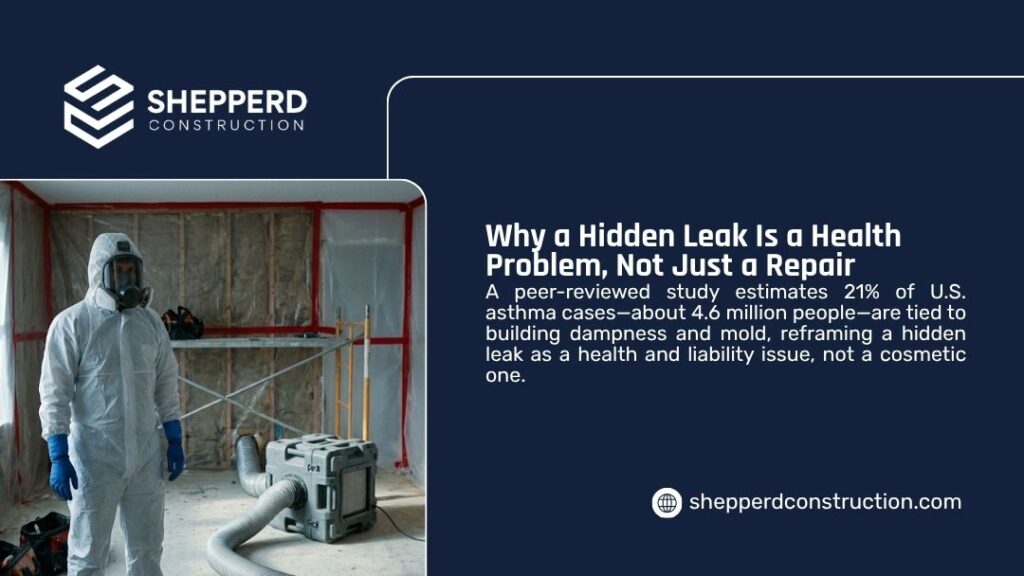
Many mold problems tied to reconstruction begin here. A failed flashing detail can send water into a wall cavity. Poor balcony waterproofing can affect framing below. Cracked stucco may allow water behind the finish. A roof leak can move through insulation and ceiling systems before it appears indoors. By the time a musty odor or stain appears, the affected area may already include hidden mold growth and damaged materials.
This is also why a standard water damage restoration mold response may not always fit a complex property. A restoration crew may dry a room and remove contaminated drywall. A reconstruction contractor has to ask whether the wall, roof, balcony, or waterproofing assembly must be rebuilt.
For HOA communities, exterior envelope problems can affect multiple owners, shared spaces, insurance claims, reserve planning, and resident trust. Shepperd Construction’s experience with building envelope reconstruction for HOAs fits that exact type of work.
What Property Managers, HOAs, and Building Owners Should Document
Documentation matters because water and mold problems rarely stay simple for long. A property manager may receive the first complaint. An HOA board may need to justify a repair scope. A building owner may have to compare repeated maintenance costs against a larger reconstruction plan. In some cases, attorneys or forensic engineers may already be involved.
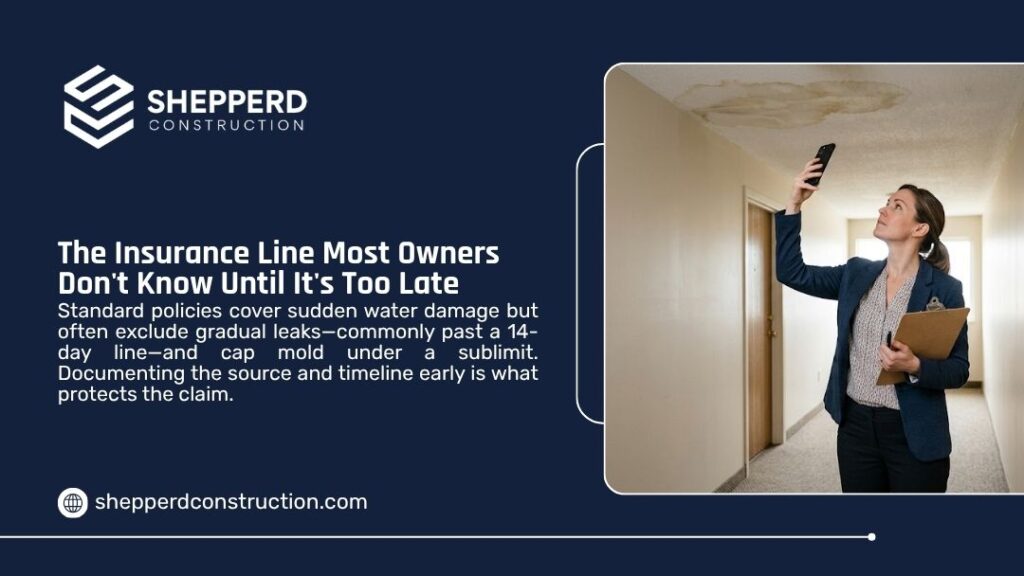
Good documentation should show what was found, when it was found, where it was found, and what action was taken. Photos, dates, maintenance records, leak history, roof reports, engineer observations, prior repair notes, moisture readings, insurance communication, access logs, and resident reports can all help clarify the story.
The Occupational Safety and Health Administration states that a remediation plan should include steps to permanently correct the water or moisture problem and should address containment and removal of moldy building materials in a way that prevents further contamination.
That guidance fits the practical needs of a reconstruction project. If the moisture problem is not permanently corrected, mold remediation and water damage work may only buy time. If affected materials are removed without containment or planning, the spread of mold can become a larger concern. If records are poor, stakeholders may struggle to agree on scope, cost, and responsibility.
For property managers who need to keep residents informed while work progresses, Shepperd’s piece on managing a reconstruction project as a property manager offers a relevant companion topic.
Who Should Be Involved Before Reconstruction Decisions Are Made?
Complex mold and water damage restoration should not be reduced to one contractor walking the site and guessing. The right team depends on the building, the damage, the legal sensitivity, the occupants, and the level of risk.
| Stakeholder | Role in the Decision | Why It Matters |
| Building owner or HOA board | Approves access, budget, timing, communication, and repair direction | Reconstruction affects cost, operations, and long-term asset value |
| Property manager | Coordinates residents, tenants, records, access, and scheduling | Occupied buildings require order and clear communication |
| Forensic engineer | Evaluates cause, extent, and technical repair needs | Findings help define scope and reduce guesswork |
| Construction defect attorney | Handles legal strategy where applicable | Legal issues should stay separate from public marketing claims |
| Reconstruction contractor | Prices, phases, plans, and performs the repair | Complex work needs constructability knowledge |
| Insurance or risk team | Reviews policy, documentation, and claim requirements | Coverage may depend on cause, timing, and scope |
Shepperd Construction’s business model is built around this kind of relationship-driven work. The company works with forensic engineers, defect attorneys, property managers, building owners, and HOA communities to support technically sound repair planning. For construction defect work, that may include investigative testing, cost-of-repair services, and reconstruction after a matter has been resolved. Public content should describe that work with care, since many details can be legally sensitive.
That careful tone is not weakness. It is part of the brand. Shepperd’s message is that the company brings care, quality, knowledge, experience, communication, and more than 11 years of proven reconstruction work in Texas.
Mold and Water Damage Repair in Texas: Why Local Conditions Matter
Texas buildings face a tough mix of heat, humidity, heavy rain, wind-driven storms, hail, UV exposure, and soil movement. Those conditions can stress roofs, sealants, balconies, stucco, cladding, foundations, windows, and waterproofing systems. Over time, even a small gap in the building envelope can turn into recurring water damage and mold remediation concerns.
For a building owner in Texas, the risk is not only mold. It is repeated moisture entry. A property may dry after one storm, then take on water again during the next. A wall may be repaired inside while the exterior defect remains. A roof may be patched several times before someone asks whether a larger reconstruction scope would be more responsible.
This is where CapEx and aging infrastructure work becomes important. Not every project is tied to construction defect litigation. Many properties simply reach a point where aging systems need planned repair or replacement. For REIT owners, commercial landlords, HOA boards, and multifamily property managers, the right plan can protect value and reduce repeat disruption.
Shepperd Construction serves Texas properties, including major markets such as Austin reconstruction contractors, Dallas reconstruction contractors, San Antonio reconstruction contractors, and Fort Worth reconstruction contractors. The company’s Texas focus matters because local climate, building practices, and property types influence repair decisions.
How the Reconstruction Process Usually Works
A reconstruction project should start with the source, not the stain. That means the team first looks for the moisture source, damage pattern, affected area, and building systems involved. If the issue is active, temporary protection may be needed before a permanent repair can start.
From there, preconstruction services become valuable. The contractor may review access needs, phasing, safety, occupant communication, pricing, material lead times, engineer input, and the probable repair sequence. In occupied HOA, apartment, senior living, student housing, school, municipal, or commercial settings, this step can protect the schedule and reduce confusion.
Selective demolition or invasive testing may follow when hidden conditions need to be confirmed. That does not mean tearing apart the whole building without a plan. It means opening the right areas, documenting what is found, and using that data to build a responsible scope. In some projects, this phase also helps forensic engineers or other technical professionals better understand water paths, material damage, and system failure.
Once the scope is clear, damaged or non-salvageable materials can be removed. Mold-infested materials may require containment and proper handling. Structural components may need review before replacement. Waterproofing, cladding, windows, roof systems, framing, sheathing, and finishes may all become part of the repair, depending on what the project reveals.
The goal is not just restoration of mold-water damage work. The goal is a durable repair that addresses the cause, restores function, and leaves the owner with clear documentation. That is why preconstruction and reconstruction planning should never be treated as a formality on large projects.
Common Mistakes That Lead to Repeat Mold Growth
Repeat mold growth usually means the moisture problem was not solved. Painting over stains, replacing drywall before the cavity is dry, ignoring roof or window leaks, skipping exterior envelope review, and relying on surface cleanup can all lead to the same result: the property looks repaired, then the mold comes back.
Another common mistake is assuming one visible mold spot equals one isolated problem. Water does not respect unit lines, lease lines, or room boundaries. It can travel through framing, insulation, ceiling assemblies, exterior walls, shafts, and HVAC paths. In a multifamily or commercial building, the first visible stain may be several feet away from the actual point of entry.
The ANSI/IICRC S520 standard is widely recognized in the remediation industry and describes procedures and precautions for professional mold remediation in residential, commercial, and institutional buildings.
That type of standard matters because mold remediation and water damage restoration should not be improvised. The same is true for reconstruction. A contractor must understand not only what to remove, but what to rebuild and why. A clean room above a wet wall cavity is not a complete solution. A new finish over failed waterproofing is not a durable repair.
Cost, Timeline, and Scope: Why No Two Projects Look the Same
The cost of mold and water damage restoration can vary widely because the visible damage rarely tells the full story. A small affected area with a fixed moisture source may be handled through limited remediation and finish repair. A large property with hidden water damage, structural remediation, difficult access, or failed building envelope systems can require a much larger reconstruction plan.
Timeline depends on access, material damage, occupant needs, engineering review, permits, insurance coordination, weather, material availability, and the repair sequence. In HOA and commercial settings, phasing can be just as important as cost. Residents may need notice. Tenants may need continued access. Property managers may need weekly updates. Building owners may need board approval or capital planning.
This is why a water damage restoration service for mold remediation is not always enough. Water and mold damage restoration may restore a room, but full reconstruction may be required to restore a building system. The difference has real financial consequences.
A low initial scope can look attractive on paper. But if it misses the source of water and mold, the owner may pay twice. First for cleanup, then for the reconstruction that should have been considered earlier.
How to Decide Between Remediation and Reconstruction
The decision between mold remediation and full building reconstruction should be based on material condition, moisture source, structural risk, and long-term performance.
If the moisture source has been corrected, the affected area is limited, materials are non-structural, and post-remediation conditions can be verified, remediation may be the correct path. If the water source remains unknown, if porous materials are saturated, if the building envelope has failed, if structural components are damaged, or if the same area has had repeat repairs, reconstruction should be evaluated.
For building owners and property managers, the safest question is simple: will this repair solve the cause or only cover the result?
That question is especially important in construction defect and post-litigation repair work. A surface fix can create risk if the original defect remains. A proper reconstruction scope should connect the cause, the affected materials, the repair method, and the expected performance of the system.
Shepperd’s resource on engineering assessment for full reconstruction can help stakeholders understand when a technical review may be needed before a major decision.
FAQs About Mold Remediation, Water Damage, and Reconstruction
What is the difference between remediation and mitigation?
Mitigation limits immediate damage. Remediation deals with contamination, affected materials, and unsafe conditions left behind. In a water loss, mitigation may stop the spread of water. Remediation may address mold, contaminated porous materials, and moisture-damaged areas.
Does mold always require reconstruction?
No. Mold does not always require reconstruction. A small, contained area may only need mold remediation if the moisture source is fixed and affected materials can be safely cleaned or removed. Reconstruction becomes more likely when mold is tied to failed waterproofing, structural decay, large affected areas, or recurring water damage.
When does mold require full building reconstruction?
Mold may require full building reconstruction when the damage extends into wall systems, roof assemblies, balconies, framing, sheathing, insulation, or other building components that cannot be cleaned or dried in place. It may also be required after construction defect repair, aging infrastructure failure, or repeated leaks.
Is water damage restoration the same as mold remediation?
No. Water damage restoration is broader. It refers to returning a property to its pre-loss condition after water damage. Mold remediation focuses on mold contamination and moisture control. A project may require both water damage restoration and mold remediation, and some projects may also require reconstruction.
What are remediation services in a property context?
Remediation services address harmful or defective conditions in a property. That may include mold, water damage, contamination, damaged materials, or moisture-related conditions. In construction, remediation often means correcting the condition before restoration or reconstruction can move forward.
What is the difference between water mitigation vs water restoration?
Water mitigation happens first and aims to stop additional damage. Water restoration comes after and focuses on repair, replacement, and return to use. If the damage has affected structural or exterior systems, water restoration may not be complete without reconstruction.
Can a building be remediated without being rebuilt?
Yes. A building can be remediated without full reconstruction if the affected area is limited, the source of moisture is corrected, and materials remain sound. But if the damage reaches structural components, building envelope systems, or mold-infested porous materials, reconstruction may be the better long-term repair.
When Cleanup Is Not Enough, Bring in a Reconstruction Team
Mold remediation vs full building reconstruction what triggers it is not about choosing the bigger service. It is about choosing the right scope for the building. If the problem is limited contamination, remediation may be enough. If the issue involves failed waterproofing, saturated porous materials, structural damage, recurring leaks, or construction defect repair, full building reconstruction may be the safer and more responsible path.
For Texas building owners, HOA property managers, forensic engineers, construction defect attorneys, and commercial stakeholders, a mold issue should never be judged only by what is visible. The real risk may be behind the wall, above the ceiling, below the balcony, or inside the exterior envelope. That is why care, communication, quality, and technical knowledge matter.
Shepperd Construction helps Texas clients address complex reconstruction projects with a practical, relationship-driven approach. When the damage calls for more than cleanup, the next step is to evaluate the source, define the scope, and build a repair plan that lasts.
For help with a complex reconstruction, building envelope, water damage, or post-litigation repair project in Texas, contact Shepperd Construction to discuss the next step.