
By Brett Grobarz, Vice President of Sales, Shepperd Construction
If you manage a Texas condominium association, your board and owners will ask one question first: how long will this take? The answer depends on which kind of work you mean.
The Short Answer: Weeks for a Unit Refresh, Months for Building Reconstruction
- Individual unit renovation: A cosmetic update and a full gut renovation have different scopes, approvals, and schedules. The unit owner and association rules often shape the work.
- Association-led building or envelope reconstruction: Work on roofs, balconies, walls, windows, and waterproofing across one or more buildings can take many months.
For a 100-unit occupied Texas multifamily building, Shepperd’s published timeline gives a 12–16-month range from permit submission to completion for a full building-envelope reconstruction. This is a project example, not a promise for every condo. The full timeline may be longer when investigation, repair design, board decisions, funding, or permitting happen before permit submission.
The schedule should state its start and finish points. “Construction duration” may mean time from mobilization to substantial completion, while a project timeline can include investigation, design, approvals, procurement, inspections, and closeout.
Typical Condo Reconstruction Timelines by Scope and Building Size
The scope and number of buildings matter more than the word “condo.” Shepperd’s published timeline guidance lists the following planning ranges. Use them as starting points; the project team should confirm a schedule after assessing the building, access, occupancy, and repair scope.
| Project scope | Published planning range |
|---|---|
| Balcony waterproofing only | 2–4 months |
| Localized stucco repair | 3–5 months |
| Full building re-stucco | 8–12 months |
| Complete building-envelope remediation | 10–16 months |
| Structural repairs with re-cladding | 12–18 months |
| Complete reconstruction of structure and envelope | 18–30 months |
| Phased reconstruction in occupied space | 24–36 months |
These ranges describe different project scopes and are not interchangeable. A detailed schedule should identify whether its dates run from permit submission, mobilization, or another agreed milestone. For more detail, see Shepperd’s published Texas reconstruction timeline guidance.
Unit Renovation vs. Building Reconstruction: Who Controls the Clock

A unit renovation is driven by the individual owner. Its pace depends on the board’s alteration approval process and building rules such as permitted work hours.
Building reconstruction is driven by the association, because it touches common elements. That changes the scheduling picture. The building is usually occupied, work may span several buildings, and dozens of owners need notice and access coordination. For scope details, see our multifamily condo reconstruction services.
Phase-by-Phase Timeline for Condo Building Reconstruction
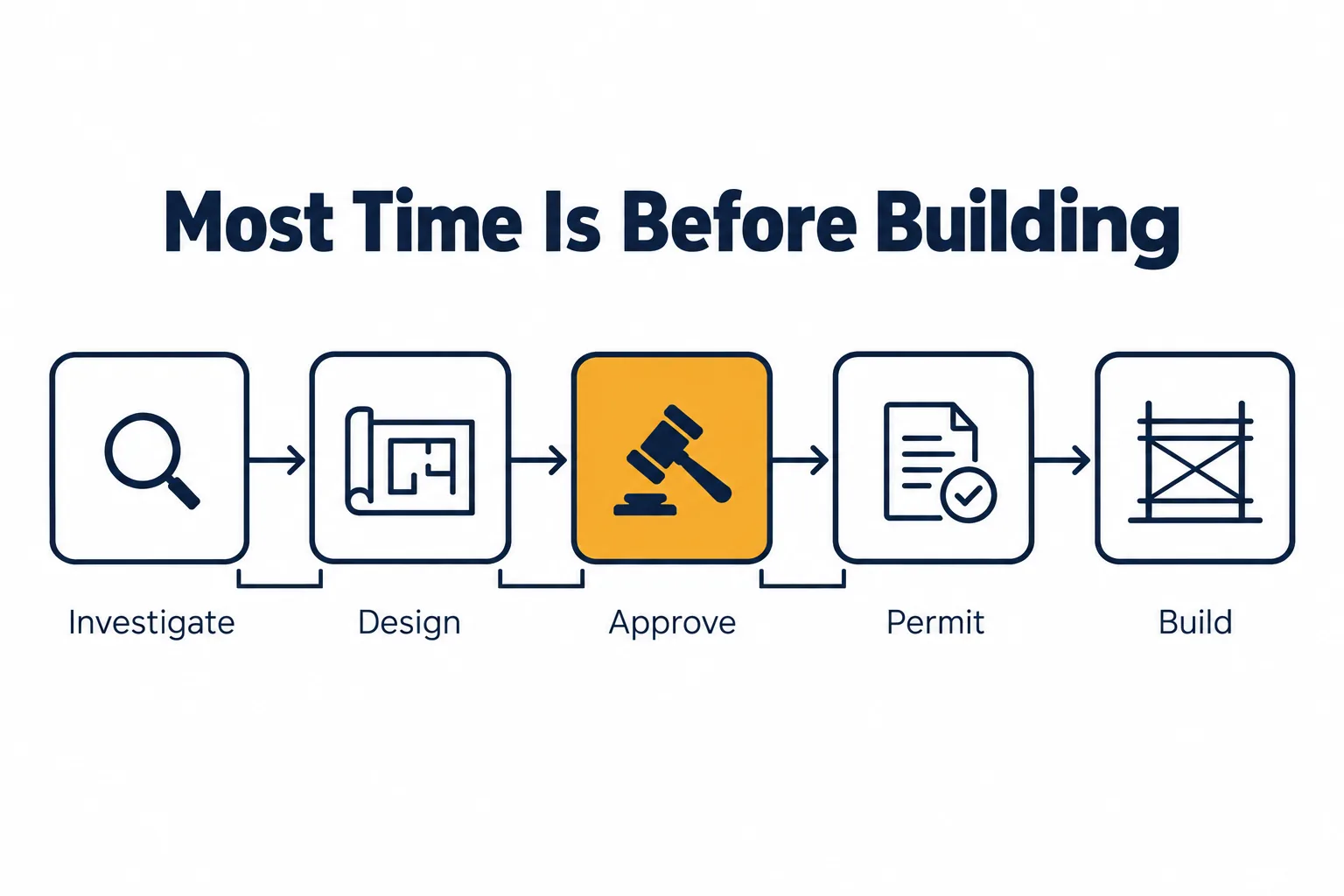
Each phase has its own drivers, and the slowest ones often sit outside construction. Rather than quote durations that may not fit your property, use the project schedule to identify decisions, dependencies, and milestones for each phase. Some activities may overlap, while others depend on completed design, board approval, permit review, or material submittals.
Phase 1: Investigation, Testing, and Condition Assessment
Forensic engineers evaluate the building, and a reconstruction contractor can support them with investigative openings and testing to gather data. Duration depends on how many buildings, elevations, and openings are in scope. Findings feed a cost-of-repair estimate so the association can start planning funding early.
Phase 2: Repair Design and Construction Documents
The engineer or architect prepares repair drawings and specifications. Preconstruction input can identify sequencing conflicts, access limits, and material availability issues before mobilization.
Phase 3: Board Approval, Owner Communication, and Funding
Board decisions, any owner votes your governing documents require, and special assessment or financing choices can add significant time. Build these decision dates into the schedule, including the time needed to review the scope, present costs, and notify owners. Our guide to the cost of full building reconstruction for HOA properties covers the budgeting side.
Phase 4: Permitting with Texas Municipalities
Structural and envelope work may require permits and inspections, depending on the scope and local jurisdiction. Review processes and submittal requirements vary by city. For local examples, consult the official pages for Austin commercial plan review, San Antonio commercial construction, and Fort Worth commercial permitting. A complete submittal and a plan for responding to review comments can help the team manage this phase, but no contractor can promise a city’s review time.
Phase 5: Preconstruction, Procurement, and Mobilization
Bidding, contract award, submittals, and long-lead items such as windows, doors, and specialty membranes can affect the start date. Where approvals and project conditions allow, procurement planning may overlap with permit review. Settle access planning (scaffolding, swing stages, lifts, difficult-access work), resident notices, and staging before crews arrive.
Phase 6: Construction, Phased by Building or Elevation
Work is commonly phased by building, stack, or elevation so units stay occupied and disruption stays contained. Hidden conditions found after opening walls or balconies can expand scope. A disciplined change process, with pricing and schedule impacts shared promptly, keeps the board informed about decisions that may change the work or completion date.
Phase 7: Inspections, Punch List, and Closeout
Municipal and third-party inspections, punch list work, and the closeout package (warranties, as-built records, maintenance guidance) all take time. Ask for inspections, punch-list completion, document delivery, and required approvals to appear as schedule milestones.
What Delays Condo Reconstruction Projects in Texas
- Weather. Sealants, membranes, and coatings have manufacturer requirements for temperature, moisture, and surface conditions. Texas rain and summer heat can affect when some work can proceed.
- Hidden damage behind cladding, at balconies, or around windows.
- Material lead times and product substitutions.
- Board decisions, permit review, incomplete submittals, and unit access for interior-side work.
- Communication gaps between contractor, engineer, and manager. A single, consistent point of contact helps close them.
How Hidden Water Damage Can Extend the Schedule
A roof leak or other water intrusion can add work if moisture has reached concealed assemblies. Early assessment helps define the repair scope before the schedule is finalized. Whether the HOA or a unit owner is responsible for water damage depends on the declaration, governing documents, and applicable law. Review the documents with counsel. From a construction standpoint, the priority is to investigate the source and affected assemblies before repairs begin.
Can Residents Stay in Their Units During Reconstruction?
Often, yes. Exterior envelope work is frequently completed with units occupied through phasing. Some interior or structural work may require temporary relocation. Plan noise windows, access, parking, and safety notices early, and share them before mobilization.
Checklist: How Property Managers Can Keep the Schedule on Track
- Engage the engineer and contractor early so investigation and cost of repair happen together.
- Bring the contractor into design for constructability review.
- Line up board decisions and funding before permits are issued.
- Set a resident communication plan and access schedule.
- Ask for a written schedule that defines the start and finish dates, lists key approvals and procurement milestones, phases work by building or elevation, and identifies weather and hidden-condition allowances.
Frequently Asked Questions
Related readingReconstruction Contractors Austin TX: Engineer ApprovedRead the guide →Frequently asked questions
How long does condo building reconstruction take in Texas?
Does the timeline include investigation, design, and permits?
What causes condo reconstruction delays?
Can residents stay in their units during exterior reconstruction?
Can design, permitting, and procurement happen at the same time?
Plan Your Condo Reconstruction Timeline with a Texas Team That Has Done It for 11+ Years
A realistic schedule starts with knowing what is behind the walls. For more than eleven years, Shepperd Construction has helped Texas associations and their advisors through building-envelope and defect-repair reconstruction, including investigative testing and cost-of-repair services that give boards the numbers they need. If your property faces envelope, waterproofing, or structural repairs, contact our team to discuss the project scope and schedule.