
Commercial Caulking for Texas Multifamily Buildings
Sealant joint replacement at windows, panels, and transitions across Texas
Sealant joints are the first line of defense at windows, panel joints, and transitions, and in the Texas sun they wear out faster than the materials around them. Shepperd Construction provides commercial caulking for condos, apartments, and commercial buildings across Texas, cutting out failed joints and replacing them with sealant designed for the movement.
- 72-Hour Average Response
- Actionable Cost of Repair Estimates
- No-Obligation Consultation
Commercial caulking, also called sealant joint replacement, removes failed sealant from the joints of a building’s exterior and installs new sealant with the right backer rod, primer, and joint shape. Done properly, a sealant joint stretches and compresses with the building instead of tearing.
Why Caulking Over Old Sealant Fails
The fastest way to caulk a building is to run a new bead over the old one. It looks fine for a season, then the new sealant peels away because it never bonded to a clean surface and the joint has no room to move. Most joint failures we see are adhesion failures from poor preparation, not bad sealant.
Our crews cut out the old sealant, clean and prime the joint, set backer rod at the right depth, and tool the new sealant to the right shape. Where joints are not the real source of water, such as a missing sill pan, we point you to window leak repair instead.
Full Removal, Not Overlay
Old sealant is cut out and the joint cleaned and primed before new sealant goes in.
Sized for Movement
Backer rod and joint shape are set so the sealant moves with the building.
Fast Service Response
Our Service Department runs a 72-hour average response with one point of contact.
Signs Sealant Joints Need Replacing
Sealant failures are visible from the ground if you know what to look for:
- Cracked, split, or hardened sealant at windows and doors
- Sealant pulling away from one side of the joint
- Gaps at panel joints, control joints, or transitions
- Staining or streaks below joints after rain
- Chalky or sticky sealant that has lost its stretch
- New caulk applied over old sealant
- Leaks that appear at the same joints each storm
When leaks continue after joints are replaced, the source is usually behind the cladding. Water intrusion testing finds it.
Sealant Work at Height
Many joints sit well above ladder height on mid-rise buildings. We reach them by lift, by swing stage, or by rope access, depending on the building and the site. Our guide to rope access versus swing stage explains how owners choose between them.
Working at height also lets us inspect the joints and cladding around them up close, so the board gets a record of conditions on every elevation, not just the joints that were visibly failing from the ground.
Who We Work With on Sealant Projects
Sealant projects are usually planned maintenance. We give each decision-maker what they need to plan it.
Property Managers
One point of contact, access planned around residents, and photo records by elevation.
Owners & Asset Managers
Joint condition records and pricing for capital planning across buildings.
Commercial Caulking Services
As a commercial caulking contractor, we handle sealant across the full building exterior.
Window & Door Perimeters
Perimeter joints at windows and doors cut out and resealed.
Panel & Control Joints
Joints in panels, stucco, and EIFS sealed to move with the wall.
Expansion Joints
Larger movement joints sized and sealed with the right system.
Transitions
Joints where different materials meet, such as cladding to trim.
Penetrations
Pipes, vents, and fixtures through the wall sealed and flashed.
Horizontal Joints
Joints at ledges and sills sealed to shed water.
Joint Preparation
Cleaning, priming, and backer rod set for proper adhesion.
Access at Height
Lifts, swing stage, and rope access for upper elevations.
How a Sealant Project Runs
Sealant projects follow a simple sequence, elevation by elevation.
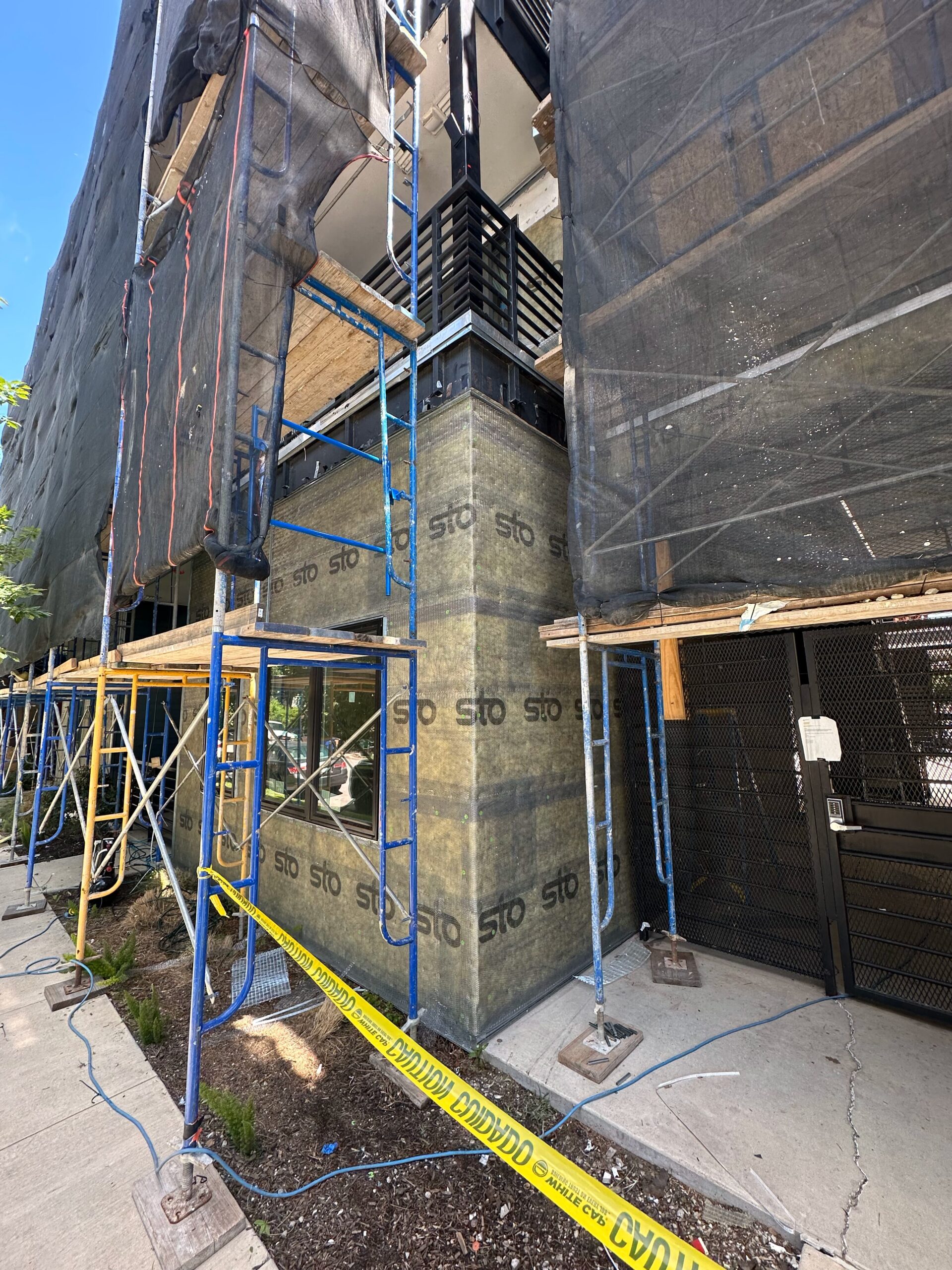
We survey joints on each elevation and check how well existing sealant is bonded.
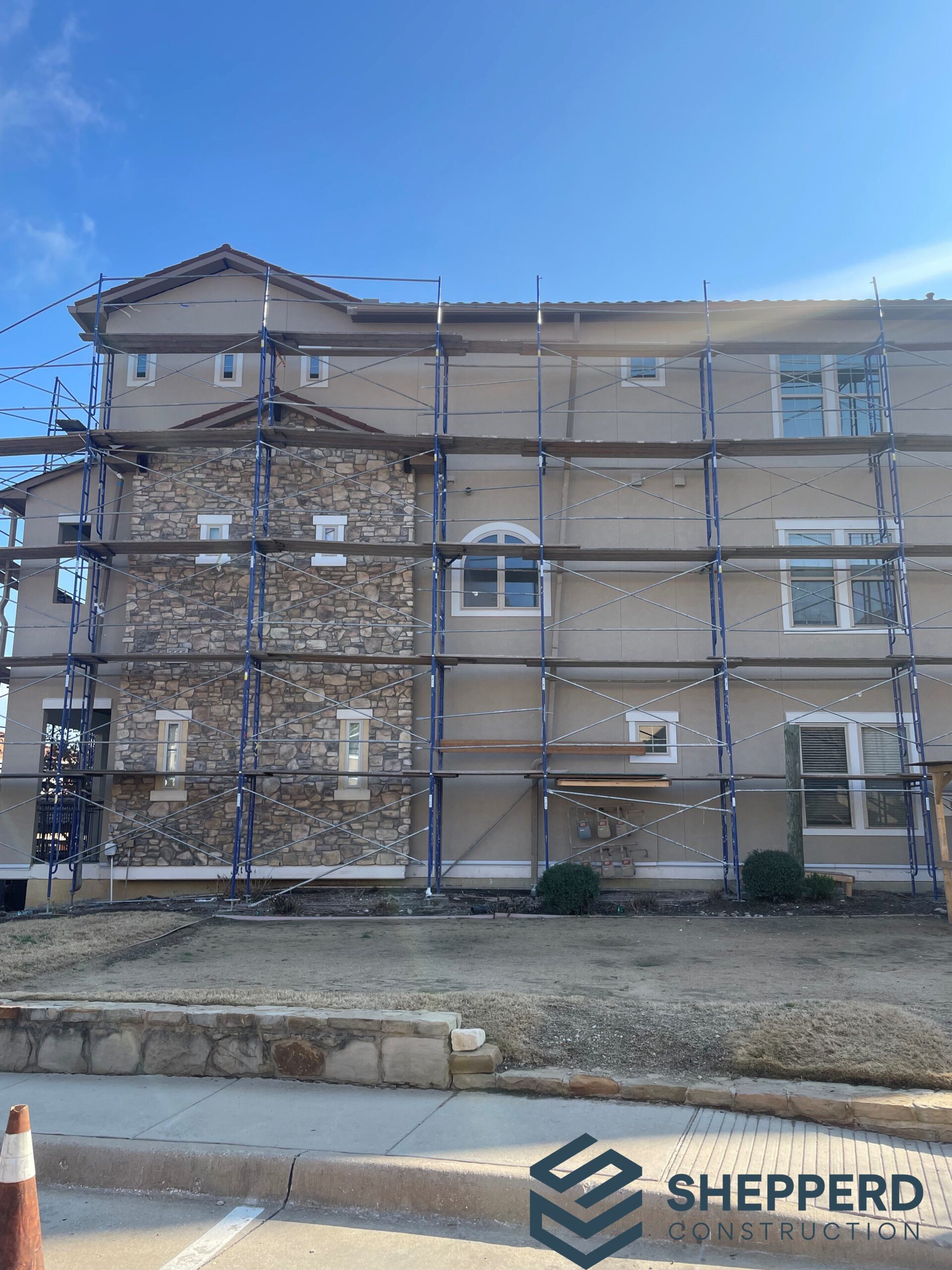
You receive a priced scope by elevation and joint type.
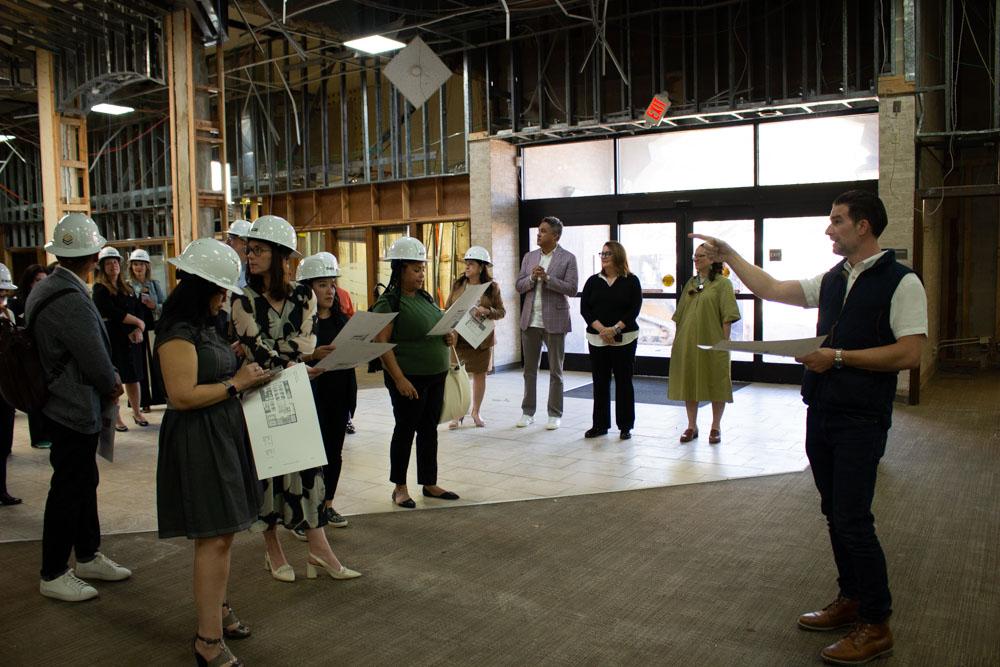
Crews cut out, prepare, and reseal joints, working around residents.
Finished elevations are inspected and photo records handed over.
Why Managers Call Shepperd for Sealant Work
- 12 Years of Experience
- 500 Projects Completed
- Offices in Dallas, Austin & San Antonio
- 100% Licensed & Insured
Commercial Caulking Across Texas
Dallas
Sealant joint replacement across Dallas and the DFW Metroplex.
Fort Worth
Joint sealing at brick veneer and stone cladding across Tarrant County.
Austin
Sealant work on multifamily and commercial buildings in Central Texas.
San Antonio
Joint sealing on stucco and EIFS buildings across San Antonio and South Texas.
Related Services
Sealant is one layer of the wall. These services cover the layers behind it and the access to reach them.
Commercial Waterproofing
Membranes, flashing, and barrier systems that keep water out of the structure.
Frequently Asked Questions
Service life varies with the sealant type, the joint design, and sun exposure, and Texas heat and UV shorten it. Rather than a fixed schedule, inspect joints regularly and replace them when you see cracking, loss of adhesion, or hardening.
It should not be. New sealant will not bond reliably to old, weathered sealant, and the overlay leaves the joint too thin and too stiff to move. The old material needs to be cut out and the joint cleaned and primed first.
Backer rod is a foam rod placed in the joint before sealant goes in. It controls the depth of the sealant and gives it an hourglass shape, so the sealant bonds only to the two sides of the joint and can stretch without tearing.
Because sealant is a secondary defense. If water is getting behind the cladding through flashing, a missing sill pan, or a transition detail, new caulk on the surface will not stop it. Testing or an inspection behind the cladding finds the real source.
Most exterior joints use silicone, polyurethane, or hybrid sealants. The right one depends on the materials on each side, the expected movement, and whether the joint will be painted. We match the sealant to the joint.
By lift where the site allows, and by swing stage or rope access on taller or tighter buildings. The access method is chosen per elevation to keep the work safe and the cost reasonable.
It depends on the length and type of joints, the sealant specified, building height and access, and how much preparation the joints need. We survey the building and price the work by elevation.
We serve properties across Texas, with teams in Dallas, Fort Worth, Austin, and San Antonio.
Reseal the Building Properly
Tell us where joints are failing
Share the property type, building height, and where you are seeing failed sealant or staining. We will survey the joints and give you a priced scope by elevation. Prefer to talk first? Use our contact page.
- 72-Hour Average Response
- Actionable Cost of Repair Estimates
- No-Obligation Consultation