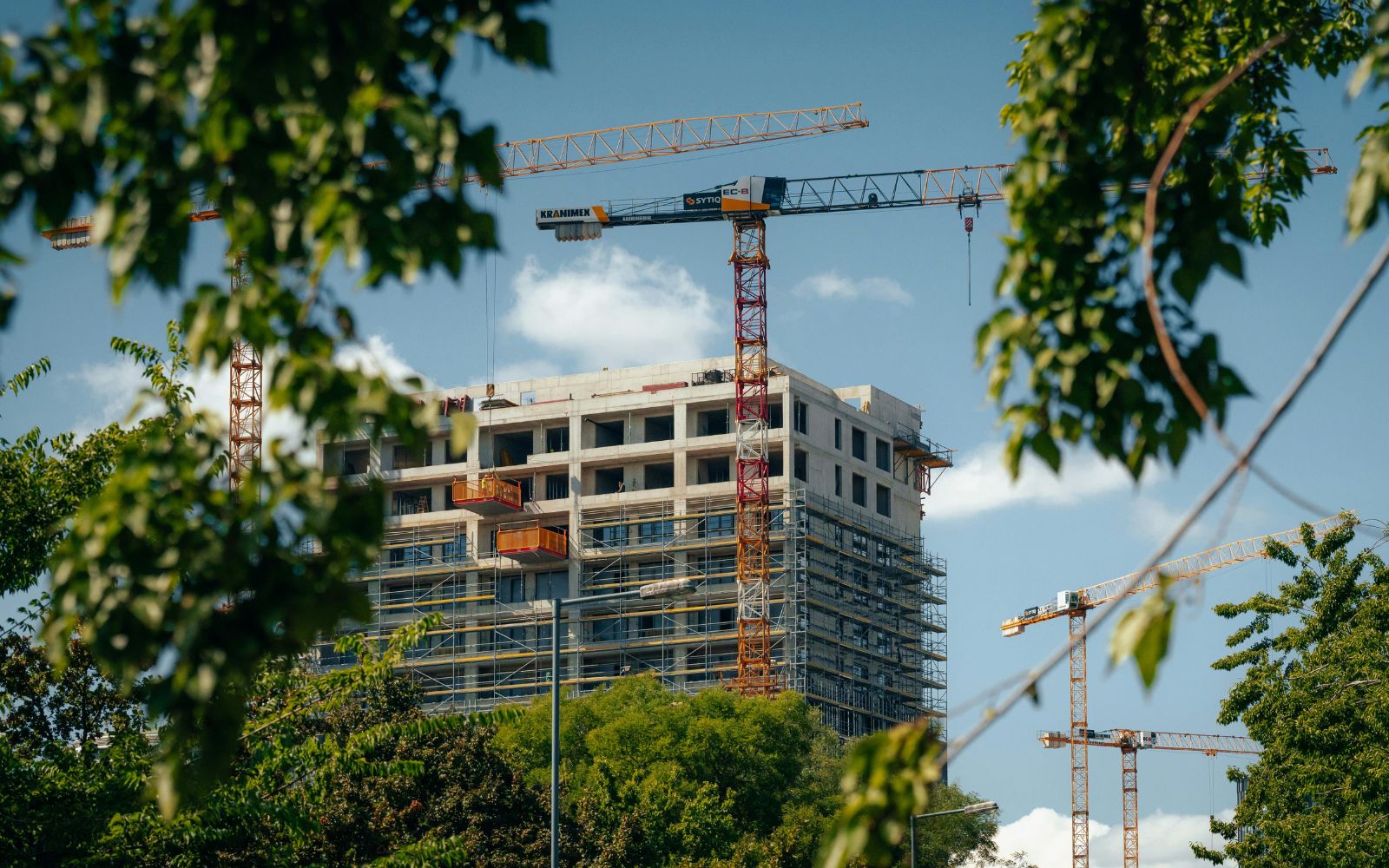
A commercial roof claim can move more smoothly when the damage is inspected early, documented clearly, reported on time, and tied to a practical repair or reconstruction scope. The hard part is that commercial roofs rarely tell the whole story from the ground. Wind uplift, hail impact, punctures, drainage problems, membrane failure, wet insulation, and interior leaks can all affect the claim value.
In this article, we explore the commercial building roof damage insurance claim process so property owners know what to document, who to contact, and when roof damage may point to a broader building envelope or reconstruction issue.
For Texas building owners, the process works best when the insurance company, contractor, engineer, attorney, and property team each stay in their lane. That matters because a commercial roof claim is not always just about roof repairs. Sometimes, it is the first visible sign of a deeper waterproofing, envelope, structural, or aging infrastructure problem.
Commercial building roof damage insurance claim process
The commercial building roof damage insurance claim process starts with safety, not paperwork. Before anyone climbs a ladder or opens a roof hatch, the property owner should secure the area, protect tenants or occupants, and stop active water entry where possible. A quick tarp, temporary drain clearing, or emergency dry-in can help limit further commercial damage, but receipts and photos matter because the insurance company may ask what was done and why.
Here’s the thing: a roof leak is not always just a roof leak. On a commercial property, water can travel through insulation, parapet walls, wall cavities, HVAC curbs, roof drains, or exterior cladding before it shows up inside. That is why the commercial building roof damage insurance claim process should include an inspection of the roof, the building envelope, and any interior areas affected by water.
Texas has a high storm-loss profile. NOAA’s Texas summary reports 190 billion-dollar weather and climate disaster events affecting the state from 1980 through 2024, including 126 severe storm events. The five-year average from 2020 through 2024 was also far higher than the long-term state average. That context matters because winds, hail, high winds, and storm damage are not rare one-off problems for Texas commercial property owners. They are part of the operating risk of owning buildings in the state.
The process below is not legal advice and does not replace your commercial property insurance policy. It is a practical, field-level guide for owners, property managers, HOA boards, and facility teams who need to file a claim without losing control of documentation, scope, or repair quality.
| Claim Stage | What Usually Happens | What the Property Owner Should Save |
| Immediate response | Secure unsafe areas, stop active leaks, protect interiors, notify key stakeholders | Photos, videos, emergency invoices, tenant reports, weather date |
| Roof and envelope inspection | A qualified roofing contractor or reconstruction contractor evaluates visible and hidden roof damage | Inspection report, roof plan notes, moisture readings, photos with scale |
| Policy review | The owner reviews deductibles, exclusions, limits, ACV/RCV language, and notice deadlines | Policy pages, endorsements, deductible details, prior repair records |
| Claim filing | The owner contacts the insurance company and opens the claim | Claim number, adjuster contact, date of loss, submitted documents |
| Insurance adjustment | The adjuster reviews damage, cause, pricing, and covered scope | Adjuster notes, carrier estimate, contractor estimate, engineer reports |
| Scope alignment | The parties compare repair scope, code items, access needs, and replacement cost value RCV | Line-item estimate, drawings, material specs, supplement requests |
| Repair or reconstruction | Approved work starts after planning, scheduling, access, safety, and communication | Contracts, permits, progress photos, change orders, completion records |
| Claim closeout | Final invoices and completion proof are submitted for any recoverable depreciation | Paid invoices, completion photos, warranties, closeout package |
A commercial roof damage claim can fall apart when the first step is rushed. Do not rely on a few phone photos from the parking lot. Flat commercial roofs, metal roofs, TPO systems, modified bitumen, built-up roofs, and roof coatings each show damage in different ways. Hail may dent metal panels, bruise membrane, loosen seams, damage roof-mounted equipment, or affect drainage. Wind may lift flashing, open seams, loosen coping, or create damage that looks minor until the next hard rain.
For owners who ask, “Can I file an insurance claim for a leaking roof?” the honest answer is: maybe. A sudden covered event, such as hail or wind, may support roof insurance claims. Long-term wear, poor maintenance, or an old unresolved leak may not. The insurance claim process depends on cause, timing, documentation, and policy language. When in doubt, contact your insurance carrier, then get a qualified inspection so the facts are not left to guesswork.
A helpful rule of thumb is to document before cleanup changes the scene. GAF’s roof claim guidance tells policyholders to document damage, contact the insurer, submit claim documents, make temporary repairs, and prepare for the adjuster. It also notes that a roofing contractor can help identify damage and meet with the adjuster to explain what was found.
The Texas Department of Insurance gives one caution that commercial property owners should take seriously: “Texas doesn’t allow a roofer or contractor to act as a public insurance adjuster on insurance claims if they’re also doing the work.” That does not mean a contractor cannot inspect, document, estimate, or explain construction scope. It means the roles must stay clear. The contractor documents building conditions and repair requirements; the licensed adjuster handles claim adjustment.
Shepperd Construction works with building owners, property managers, forensic engineers, and attorneys, but it does not act as a public adjuster. Its role is construction expertise: documentation support, preconstruction planning, building envelope evaluation, repair scope clarity, communication, and reconstruction execution.
The best commercial roof damage claim teams understand that line. They do not promise claim outcomes. They do not “waive” deductibles. They do not turn construction advice into legal advice. They provide careful documentation for commercial restoration claims, explain repair methods, and give the insurer enough construction detail to evaluate the damage.
Commercial roof damage claim timeline after winds hail
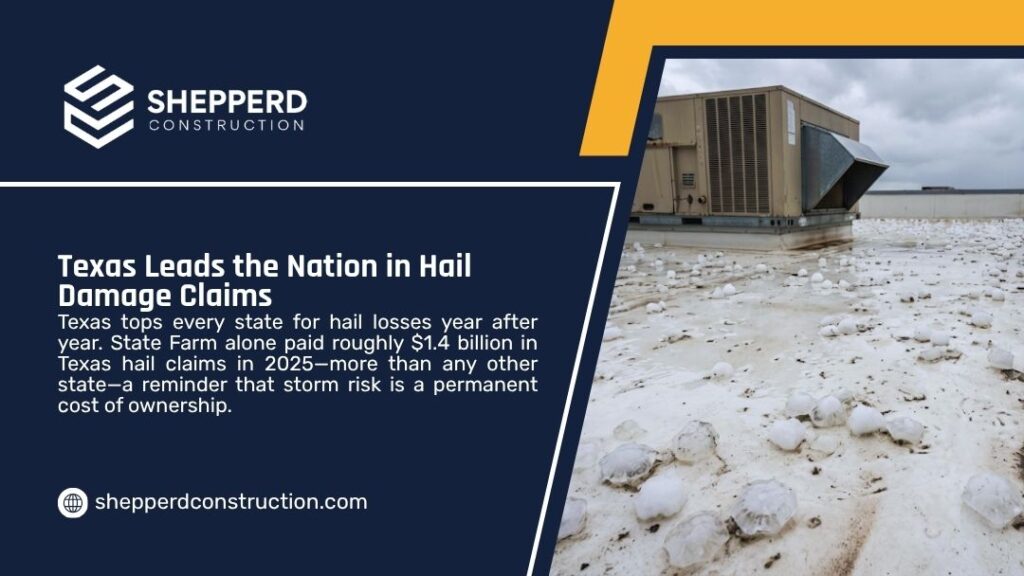
The timeline can vary, but speed helps. Waiting too long can blur the cause of loss, especially in Texas where several storms may pass through the same area in one season. If a commercial hail damage claim is filed months after the storm, the insurance company may ask which storm caused the damage, whether roof repairs were delayed, or whether the issue came from aging materials instead of sudden storm damage.
The safer path is to establish a timeline early. Record the date of loss, the first sign of roof damage, the first tenant complaint, the first interior leak, and the date you contacted your insurance company. Pull weather reports for high winds, hail size, or severe storm alerts near the property. For a commercial hail damage insurance claims file, that storm timeline can support the inspection findings.
Commercial property roof damage often affects more than the roof surface. HVAC units, gutters, skylights, rooftop screens, parapet walls, signage, interior ceilings, insulation, drywall, electrical systems, and tenant finishes may also be part of the loss. That is where many claims become underdocumented. The roof gets attention, but the connected water damage does not.
Forensic engineers may also become part of the conversation when the damage pattern is unclear, the repair scope is complex, or the property has possible construction defects, structural, waterproofing, or building envelope concerns. A contractor with reconstruction experience can help open, observe, document, and restore test areas when that type of investigation is needed.
If the building is occupied, communication matters. Tenants, residents, school staff, church members, senior living administrators, or municipal teams need to know what areas are safe, what repairs may disrupt access, and when work will happen. For larger properties, owners may benefit from a reconstruction partner with experience in occupied buildings and commercial coordination, not just roof patching. Shepperd Construction’s work in commercial building reconstruction fits that kind of complex repair environment.
Documentation for commercial restoration claims
Documentation is where many commercial roof claims are won or weakened. The insured generally has the burden to show the loss, the damage, and the value of the repair. That does not mean you need to become a roofing expert overnight. It means your file should tell a clear story that a busy adjuster, engineer, board member, or asset manager can follow.
Photos should show close-up damage, wide-angle location context, and scale. A photo of a puncture helps. A photo of the same puncture beside a ruler, marked on a roof plan, with the roof area identified, helps more. The same goes for interior leaks. A stained ceiling tile is useful, but a photo that connects the room, roof area, leak path, and date carries more weight.
For Shepperd’s clients, strong documentation is not just about the claim. It is part of responsible preconstruction. Better documentation helps the team understand what failed, what needs repair, what may require reconstruction, and how to communicate the plan before work begins.
| Evidence Type | Why It Matters | Practical Tip |
| Roof photos and videos | Shows physical damage and roof condition | Include wide shots, close shots, and scale markers |
| Interior leak records | Connects roof damage to building impact | Track room numbers, tenant complaints, and dates |
| Weather data | Helps connect damage to a storm event | Save hail, wind, and storm reports for the property location |
| Maintenance records | Helps separate sudden damage from poor upkeep | Keep prior roof repairs, inspections, invoices, and warranties |
| Contractor estimate | Defines the repair or reconstruction scope | Ask for line-item detail, not a vague lump sum |
| Moisture or core sample data | Helps show hidden wet insulation or trapped water | Use qualified professionals when destructive testing is needed |
| Communication log | Reduces confusion during the claim | Save emails, calls, claim numbers, and adjuster notes |
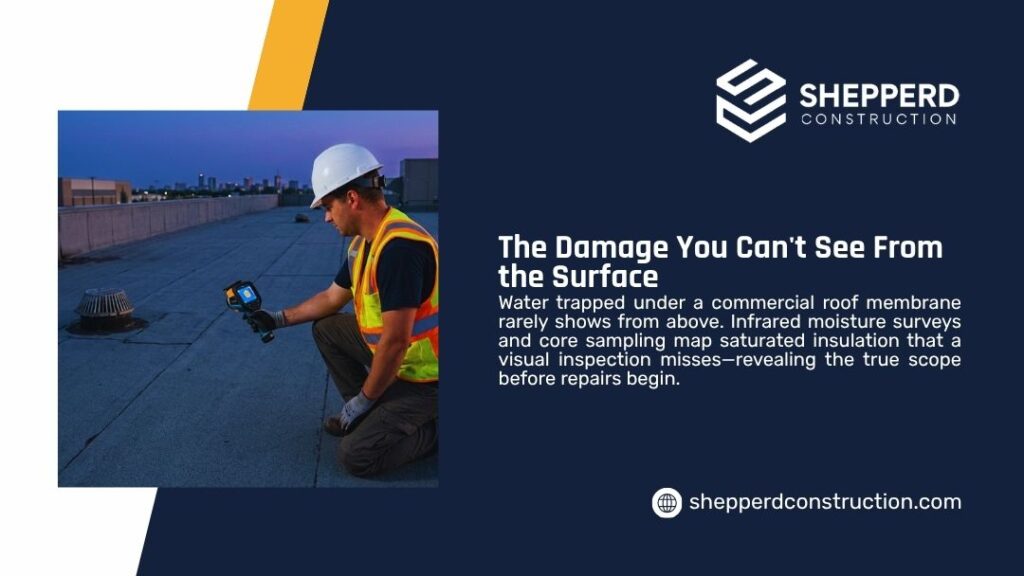
This can help you avoid a common problem: an insurance adjustment based only on visible surface damage. Commercial roofs can hold water below the membrane. Insulation can become saturated. Fasteners can loosen. Decking can corrode. Wall systems below the roofline can take on water. If the inspection stops too soon, the estimate may not include the full repair path.
For Texas properties with water entry, it helps to understand when a leak has moved beyond simple repair and into reconstruction. Shepperd highlights when water damage requires reconstruction, offering context for owners dealing with interior damage after a storm.
Causes of commercial roof damage that affect insurance coverage
The causes of commercial roof damage usually fall into two groups: sudden events and long-term conditions. Insurance tends to focus heavily on that difference. A sudden hailstorm, wind event, falling object, fire, or storm-created opening may support a covered claim. Wear and tear, deferred maintenance, installation defects, ponding that was ignored for years, or known leaks that were never corrected may face more scrutiny.
This is one reason a commercial property owner should keep roof maintenance records even when nothing bad has happened yet. A pre-loss inspection report can show the roof had been maintained. A prior repair invoice can prove the owner responded to earlier issues. A roof warranty can identify system age, materials, and installation details.
The phrase “commercial damage” sounds broad, but insurance companies do not pay broad categories. They evaluate cause, direct physical loss, covered property, exclusions, deductible, depreciation, and repair cost. That is why the commercial building roof damage insurance claim process should avoid vague statements such as “the roof is bad.” A stronger claim file says what was damaged, where it is located, what caused it, why it requires roof repairs or replacement, and what it will cost to return the property to pre-loss condition.
For property managers, the same idea applies across larger building portfolios. A storm may damage several structures in different ways. One building may need roof repairs. Another may need partial replacement. Another may show exterior envelope failure, balcony leaks, or interior damage tied to roof drainage. Shepperd’s overview of how property managers can manage reconstruction projects helps frame that broader planning context.
Insurance adjustment, ACV, RCV, deductibles, and supplements
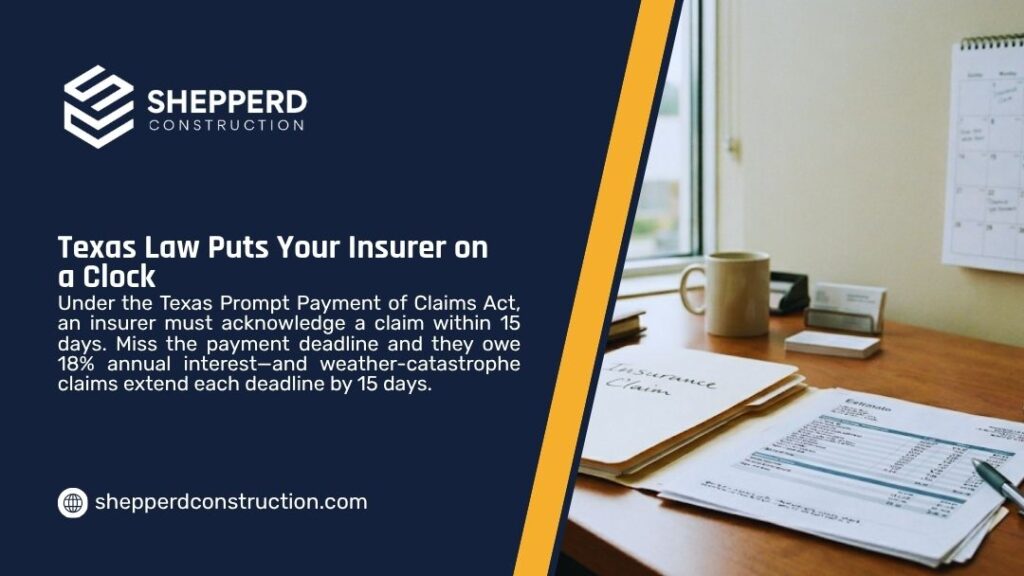
The payment side of the commercial building roof damage insurance claim process can be confusing because the first check may not equal the total project cost. Many commercial property insurance policies use replacement cost value (RCV) and actual cash value (ACV) concepts. RCV is generally the cost to replace damaged property with like kind and quality, subject to policy terms. ACV usually reflects depreciation based on age and condition.
In plain terms, the insurance company may first issue an ACV payment, minus the deductible. If the policy includes recoverable depreciation, the owner may recover additional funds after the work is complete and final costs are submitted. That second part matters. Some owners never collect depreciation because they do not submit the closeout documents correctly.
A supplement may also be needed when the initial estimate misses necessary work. For example, the adjuster estimate may include membrane replacement but miss wet insulation, code-required details, temporary access, safety protection, tenant phasing, or wall repairs tied to roof water entry. A supplement is not a trick. It is a request to correct or add scope based on documented conditions.
| Claim Term | Plain-English Meaning | Why It Matters |
| Deductible | The amount the owner must pay under the policy | It affects out-of-pocket costs and claim value |
| ACV | Depreciated value of the damaged property | Often the first payment amount |
| RCV | Cost to replace or repair with comparable property | May be paid in stages under policy terms |
| Recoverable depreciation | Funds held back until work is complete | Requires proof of completed work and cost |
| Supplement | Added or corrected scope after initial estimate | Useful when hidden damage or missed line items appear |
| Exclusion | A policy limit on what is covered | Cosmetic damage, wear, flood, or maintenance exclusions may matter |
| Proof of loss | Formal claim support required by some policies | Missing deadlines can create trouble |
Commercial owners should also be careful with contractors who say deductibles can disappear. In Texas, that can create real problems. The safe move is to follow the policy, keep payment records clean, and avoid anything that makes the invoice inaccurate.
If the roof claim turns into a larger exterior repair, the owner may need a broader reconstruction team. That is especially true when roof water has affected wall assemblies, occupied interiors, common areas, or structural components. Shepperd’s page on large reconstruction projects in Texas speaks to that kind of decision.
Commercial hail damage claim mistakes that cost owners money
The first mistake is delay. After a major storm, it is easy to assume the building is fine because water has not shown up yet. But commercial hail damage may not leak on day one. A punctured membrane, bruised surface, split seam, or damaged flashing can worsen after the next rain, heat cycle, or wind event.
The second mistake is weak documentation. A few photos are not the same as a claim file. If the claim involves commercial property roof damage, the documentation should connect the roof condition to the storm date, roof system, affected area, interior damage, and repair estimate.
The third mistake is letting the adjuster inspection happen without a knowledgeable construction representative present. The insurance adjuster has a job to do, but they may not know the building history or every roof system detail. A qualified roofing contractor or reconstruction contractor can point out damage, explain access needs, and help prevent misunderstandings during the inspection.
The fourth mistake is accepting a narrow repair scope before the hidden damage is understood. Water can move sideways. Wet insulation can remain trapped. Deck corrosion can stay hidden until the roof is opened. On some claims, the step involves limited destructive testing, moisture scans, core cuts, or engineering review. That should be done carefully and with proper authorization.
The fifth mistake is treating the roof as separate from the building envelope. Roofs meet walls, windows, parapets, drains, scuppers, expansion joints, and mechanical penetrations. When those transitions fail, a simple roof repair may not solve the leak. For owners facing that question, Shepperd’s piece on when repair is not enough for a commercial building aligns closely with that decision point.
Are roofing companies liable for damage during claim repairs?
Property owners also ask, “Are roofing companies liable for damage?” A contractor may be responsible for damage caused by poor workmanship, unsafe practices, contract breaches, or negligence, depending on the facts and the contract. But not every leak or uncovered condition is contractor-caused. Commercial reconstruction can reveal old defects, hidden moisture, rotten decking, failed flashing, or pre-existing damage that no one could see before work started.
That is why contract clarity matters. Before roof repairs or reconstruction starts, the owner should understand insurance, bonding, safety plan, access plan, warranty terms, change-order rules, site protection, and communication expectations. A good contractor will not be offended by those questions. Frankly, they should welcome them.
Shepperd Construction’s business is built around complex reconstruction, communication, care, and preconstruction planning. For owners, property managers, and HOA boards, that matters because a roof claim may quickly turn into a multi-party project with residents, tenants, engineers, attorneys, insurers, and board members all asking for updates.
How Shepperd Construction fits the commercial roof claim process
Shepperd Construction is not an insurance company and should not be presented as a public adjuster. Its role is construction expertise: inspecting building conditions, helping define repair or reconstruction scope, coordinating with engineers and property teams, and executing approved work with care. That distinction is important, especially in Texas.
For building owners who need more than a patch, Shepperd can support the repair side of the commercial building roof damage insurance claim process through preconstruction services, communication, and reconstruction planning. That is useful for commercial buildings, HOAs, apartment complexes, townhomes, multifamily condos, student housing, senior living properties, schools, municipalities, and religious organizations.
Owners can learn more about the company’s broader capabilities through its construction and reconstruction services, review examples on its project portfolio, or read more about the team’s background.
Shepperd serves commercial properties across Texas, including Austin, Dallas, Fort Worth, San Antonio, and statewide projects requiring experienced reconstruction support. Location-specific details are available for Austin reconstruction contractors, Dallas reconstruction contractors, Fort Worth reconstruction contractors, and San Antonio reconstruction contractors.
When a roof claim becomes a reconstruction project
A commercial building roof damage insurance claim process may start with a leak call and end with a larger reconstruction scope. That happens when water intrusion affects wall systems, insulation, structural framing, common areas, tenant spaces, or life-safety systems. It also happens when an aging roof was already near the end of service life and storm damage pushes the building into a broader capital repair decision.
This is where many owners need a practical voice in the room. The insurance company may focus on covered damage. The engineer may focus on cause and technical findings. The attorney, if involved, may focus on legal rights. The property manager may focus on residents, tenants, and schedule. The contractor has to translate all of that into a buildable plan.
A strong plan should answer several questions. What failed? What needs repair? What needs replacement? What is storm-related? What appears tied to aging infrastructure? What can wait? What must be handled now to protect the asset? What will disrupt occupants? What permits, access, safety controls, materials, and inspections are required?
FAQ: Commercial roof damage insurance claims
Can I file an insurance claim for a leaking commercial roof?
Yes, you can file a claim, but coverage depends on the cause of the leak and the terms of your commercial property insurance policy. A sudden event such as hail, wind, or storm damage may be treated differently than long-term wear, deferred maintenance, or an older unresolved leak. The safest move is to document the leak, contact your insurance company, and schedule a qualified inspection.
Who should inspect a commercial roof after storm damage?
A commercial property owner should work with a qualified reconstruction contractor, building envelope contractor, roof specialist, or engineer, depending on the complexity of the damage. If the issue involves water intrusion, structural concerns, or possible construction defects, a broader reconstruction and forensic review may be needed.
What documents help support a commercial roof damage claim?
Useful documentation includes roof photos, interior leak photos, weather data, maintenance records, inspection reports, contractor estimates, communication logs, and any engineer or consultant reports. The stronger the file, the easier it is for the insurance company and project team to understand the damage and repair scope.
Does Shepperd Construction adjust insurance claims?
No. Shepperd Construction does not act as a public adjuster. The company provides construction and reconstruction expertise, including inspection support, documentation, preconstruction planning, building envelope evaluation, communication, and repair or reconstruction execution.
When does roof damage require reconstruction instead of simple repair?
Roof damage may require reconstruction when water has affected insulation, walls, structural framing, interiors, common areas, or other building systems. It may also require a broader plan when the roof damage connects to waterproofing failure, aging infrastructure, or building envelope issues.
A better way to move from claim to repair
The best commercial roof claim process is calm, documented, and disciplined. Secure the property. Document the roof damage. Contact your insurance company. Review your policy. Bring in qualified construction help. Attend the adjuster inspection with facts, not guesswork. Keep clean records. Ask for scope clarification when needed. Watch the ACV, RCV, deductible, and recoverable depreciation details. Then choose a contractor who can perform the work, communicate with stakeholders, and protect the building for the long haul.
If your building has roof damage, water intrusion, hail impact, wind damage, or signs that a small leak has become a larger envelope problem, speak with a qualified reconstruction team before the repair scope gets locked in. Shepperd Construction works with building owners, property managers, engineers, and other project stakeholders on complex Texas reconstruction needs. To start that conversation, reach out and ask about the next step for your property.