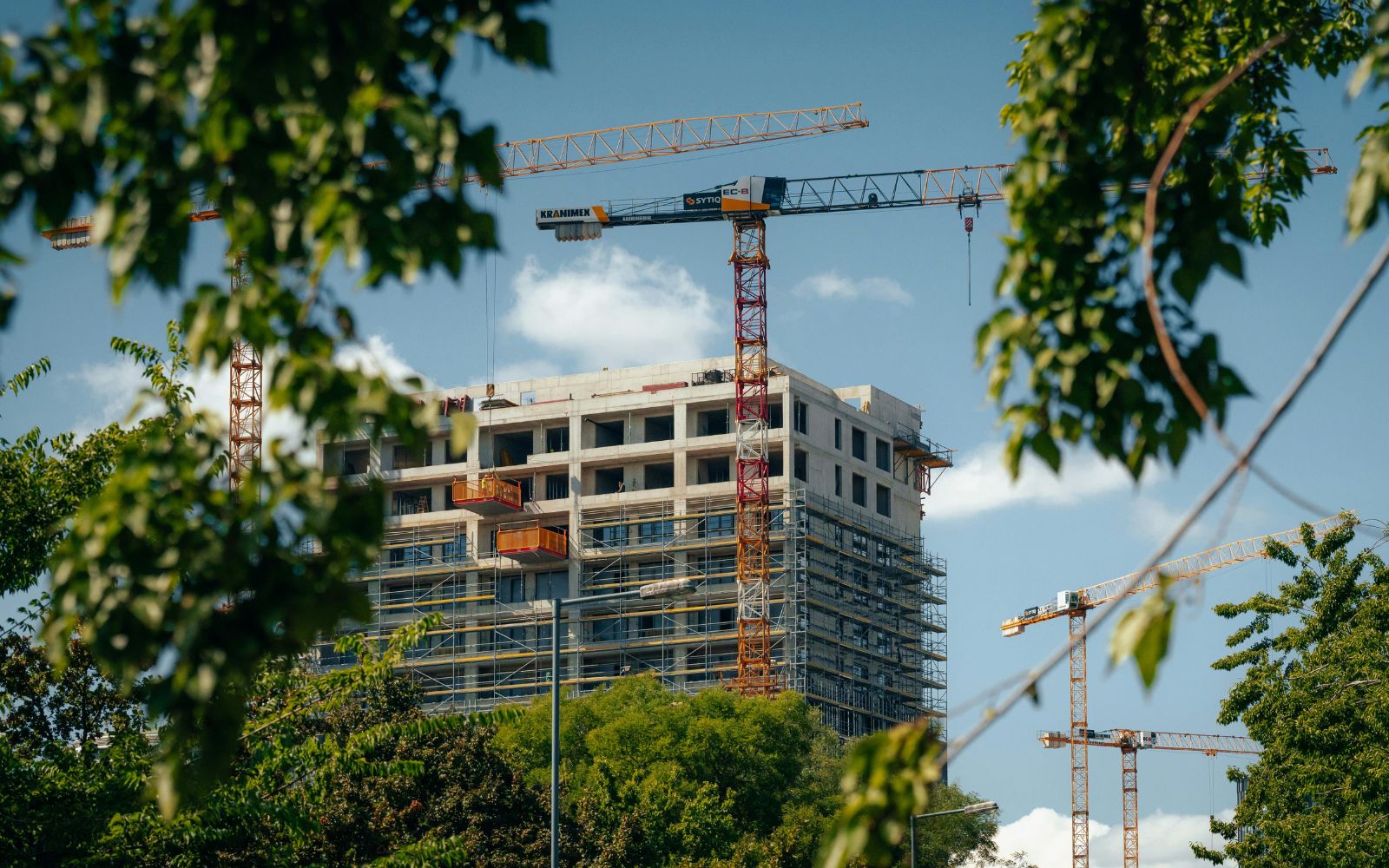
Commercial properties endure a relentless gauntlet of wear and tear, erratic weather, decaying systems, and shifting regulations. This guide digs into the specific moments when a simple repair job no longer cuts it. We’ll look at how structural stability and modern building codes dictate the play, and why a hard-nosed financial analysis often points toward full reconstruction instead of a never-ending cycle of patchwork fixes.
When is repair not enough for a commercial building
It’s the one question most commercial property owners dodge, at least until a ceiling stain starts migrating, tenants begin grumbling about stale air, or a city inspector red-flags a structural quirk. Initially, the small stuff feels manageable. You replace some flashing here, patch a hairline crack there, or swap out a single HVAC component.
But here is the reality: a commercial building isn’t a collection of independent parts; it’s a web of interconnected systems. When one link snaps, the stress doesn’t vanish; it just shifts somewhere else.
Repair makes sense when the damage is contained, and the skeleton of the building remains rock-solid. However, repair loses its punch the moment structural integrity, legal compliance, or the sheer cost of keeping a zombie system alive tips the scales. That is when a repair stops being a solution and starts being a costly delay. Ultimately, the answer to when repair is not enough for a commercial building comes down to hard, measurable thresholds, not just hopeful thinking.
According to the National Institute of Building Sciences, deferred maintenance in U.S. commercial and institutional buildings runs into the hundreds of billions annually, increasing long-term capital costs dramatically.
The goal is simple: you need to identify the thin line between a quick fix and a total overhaul before your risk and your costs multiply.
Understanding Structural Integrity and Safety Limits
A building can survive a few cosmetic blemishes. It cannot survive a compromised core. Structural damage hits the very things that keep the roof up: load paths, foundation stability, and basic occupant safety. Once you cross that line, a repair might hide the symptoms, but it won’t fix the underlying sickness.
The American Society of Civil Engineers continues to highlight that aging infrastructure and structural rot are widespread headaches across the country. If a foundation keeps settling even after you’ve patched the cracks, the soil movement hasn’t been stopped. If steel rebar is rusting away because of chronic leaks, a fresh coat of concrete won’t bring back its strength. In these scenarios, the question of replacement becomes a matter of math and physics rather than theory.
Below is a framework used in professional evaluations:
| Building System | Common Failure Mode | Repair Threshold | Reconstruction Trigger |
| Foundation | Differential settlement | Minor cracking/no displacement | Ongoing movement is hitting the load-bearing capacity |
| Commercial Roof | Membrane puncture | Isolated leak (<25% coverage) | Saturated insulation across the majority of the deck |
| HVAC Systems | Coil corrosion | Single unit inefficiency | System-wide age (20–25 years) with tanking efficiency |
| Electrical Systems | Panel overheating | Replace the faulty breaker | Obsolete wiring failing building codes |
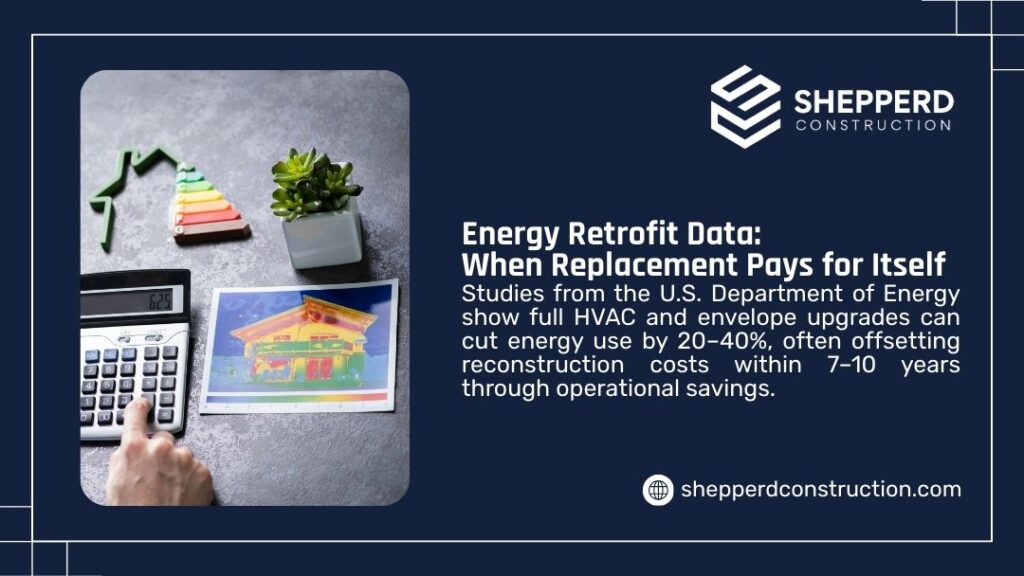
The U.S. Department of Energy reports HVAC systems account for roughly 40% of energy use in commercial buildings. Aging systems reduce energy efficiency and increase operational risk. Once safety margins shrink, repair stops being protective.
Hidden Water Damage and Mold Growth in Commercial Buildings
Water damage is the quiet saboteur of commercial properties. It begins behind façade systems, inside wall cavities, and under flooring assemblies. A leak might appear minor, but chronic moisture intrusion can weaken framing, deteriorate sheathing, and invite mold growth.
The Environmental Protection Agency states that mold can begin to grow within 24–48 hours under suitable moisture conditions. So, when is repair not enough for a commercial building affected by leaks? When moisture has migrated beyond visible surfaces. Spot drywall replacement won’t correct compromised sheathing or deteriorated structural supports. Mold remediation without addressing envelope failure merely resets the clock.
This often occurs in older buildings where waterproofing assemblies degrade over decades. Building maintenance may mask early signs, but once rot or corrosion spreads, partial correction leaves latent failure behind.
For property managers questioning how to know if water damage requires reconstruction, structural testing, and invasive moisture assessment typically reveal the extent of compromise. Superficial fixes rarely solve systemic envelope breakdown.
Aging Infrastructure and System Lifecycles
Every building component has a finite service life. The Building Owners and Managers Association (BOMA) outlines lifecycle ranges for commercial systems, showing clear expiration windows for roofs, electrical systems, and HVAC equipment. When systems exceed expected lifespan, repairs shift from preventive maintenance to reactive maintenance. That distinction matters.
| Component | Typical Service Life | Repair Viability | Reconstruction Consideration |
| Commercial Roof Membrane | 20–30 years | Local patch under warranty | Widespread membrane fatigue |
| HVAC Systems | 15–25 years | Part replacement | Repeated compressor failure |
| Electrical Infrastructure | 30–40 years | Component swap | Non-compliance with modern building codes |
| Exterior Cladding | 30+ years | Isolated panel repair | Systemic fastener corrosion |
Repeated service calls often signal systemic decline. At that point, when is repair not enough for a commercial building becomes a financial question. Continued repairs may exceed capital replacement cost within a short period.
Code Compliance and Legal Exposure
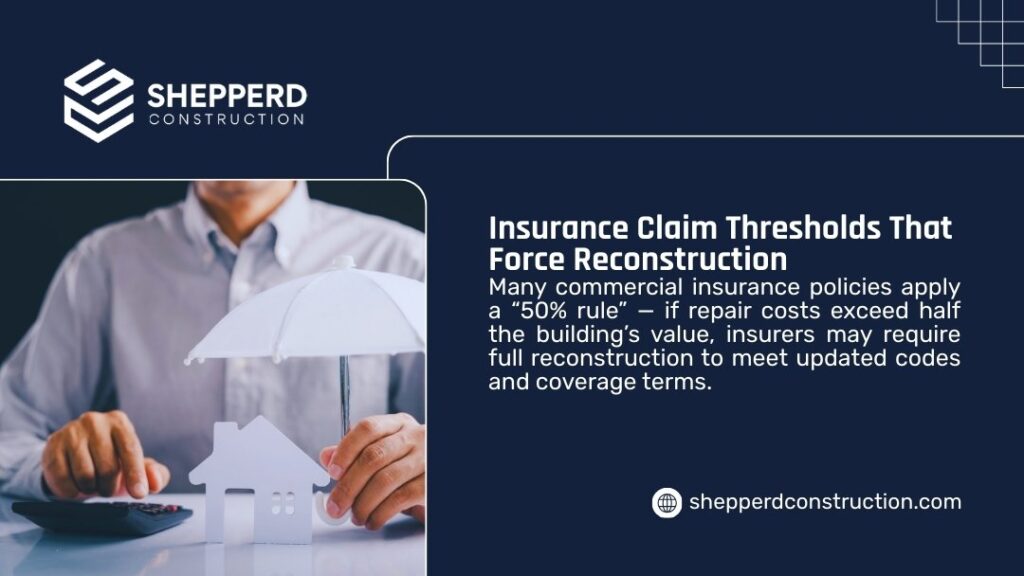
Building codes evolve. Fire separation, accessibility requirements, electrical standards, and structural reinforcement rules become increasingly stringent over time. The International Code Council updates model codes on a three-year cycle. Repair does not always bring a building up to current building codes. In some cases, major repair triggers mandatory compliance upgrades. That shift can dramatically expand the scope.
If structural issues intersect with safety codes, reconstruction may be the only path to lawful occupancy. Commercial property owners often underestimate how code thresholds influence scope.
And that’s why, when a repair is not enough for a commercial building sometimes has little to do with visible damage and everything to do with regulatory compliance.
Cost Analysis: Short-Term Fix vs Long-Term Exposure
Commercial property decisions hinge on capital allocation. Repair looks affordable upfront. Reconstruction appears expensive. Yet lifecycle cost tells another story.
The National Institute of Standards and Technology supports lifecycle cost analysis as a standard method for evaluating building investments. Consider the following comparison:
| Scenario | Initial Cost | Five-Year Risk Exposure | Operational Impact |
| Repeated Roof Leak Repair | Lower | High probability of structural deck damage | Tenant disruption |
| Full Roof Reconstruction | Higher | Reduced risk profile | Improved energy efficiency |
| Electrical Panel Patch | Moderate | Potential fire hazard | Insurance risk |
| System Replacement | Higher | Long-term code compliance | Lower utility expense |
If the cumulative repair cost approaches the replacement value, reconstruction becomes fiscally rational.
Professional Evaluation and Forensic Assessment
A credible decision rarely rests on visual inspection alone. Structural engineers assess load paths. Envelope specialists examine moisture migration. Energy audits evaluate HVAC systems.
Commercial property owners across Texas often consult experienced regional professionals such as Reconstruction Contractors Austin or Reconstruction Contractors Fort Worth when structural issues escalate beyond routine building maintenance.
For those managing commercial properties in multiple cities, understanding regional expertise matters. Firms that focus on Reconstruction Contractors for Commercial Buildings often evaluate not just damage, but long-term viability.
Organizations serving multi-location portfolios sometimes begin with a formal assessment request through professional consultation channels, such as Shepperd Construction’s service team, to evaluate reconstruction feasibility.
Real-World Thresholds in Commercial Properties
Older buildings often face compounded deterioration. Deferred preventive maintenance accelerates wear and tear. Once multiple systems degrade simultaneously, integrated reconstruction becomes more practical than piecemeal repair.
This can be seen in façade failures where repeated caulking fails to stop water infiltration, or where commercial roof saturation spreads beneath insulation layers. At that stage, when is repair not enough for a commercial building becomes evident through performance metrics rather than guesswork.
Protecting Asset Value Before Risk Multiplies
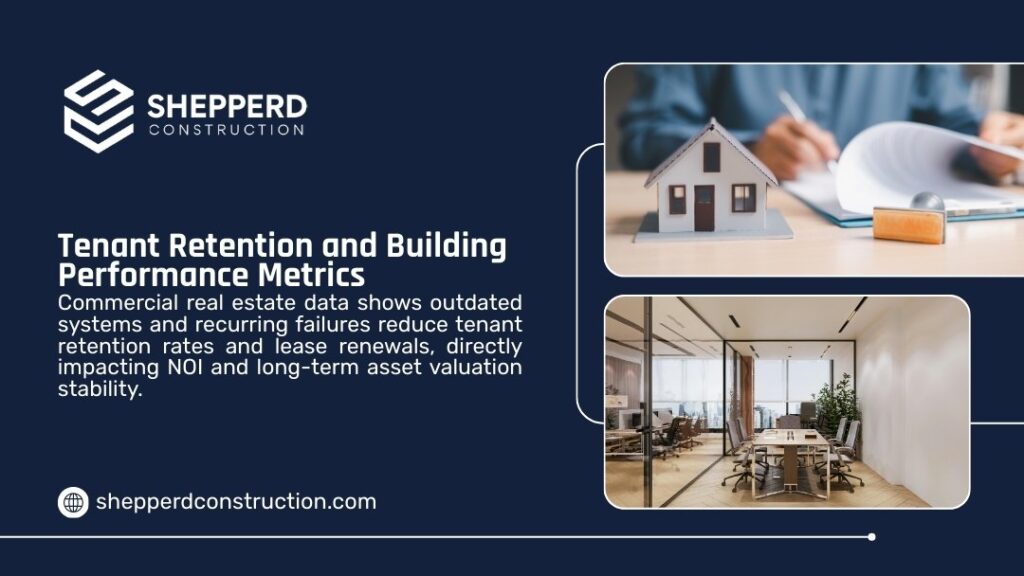
So where does that leave the commercial property owner? Repair remains appropriate for isolated, contained defects. But once structural integrity, systemic water damage, outdated electrical systems, or chronic HVAC decline intersect, reconstruction preserves long-term value.
When is repair not enough for a commercial building? It is not when the damage looks dramatic. It is when the building structure can no longer meet safety, code, efficiency, or financial performance standards through patchwork solutions.
For property managers and owners evaluating reconstruction decisions, reviewing past project outcomes can offer practical insight into scope and scale expectations through documented project case studies.
If your commercial building shows recurring failures, structural deterioration, or code pressure, the next responsible step is a comprehensive professional evaluation rather than another temporary fix. Long-term asset protection demands clarity, not guesswork.
The difference between repair and reconstruction often determines whether a building remains an asset or becomes a liability. And that decision, made at the right time, protects tenants, compliance standing, and capital investment for decades ahead.