Water damage doesn’t always mean you need to tear a building apart. Sometimes a repair handles it. Other times, the problem runs deeper, behind drywall, beneath flooring, inside structural framing. This guide explains how to know if water damage requires reconstruction, what professionals look for, and when simple restoration won’t protect structural integrity. If you’re a property owner, HOA manager, or commercial asset holder in Texas, this can help you make the right call before minor damage becomes major structural damage.
How to know if water damage requires reconstruction
Not all water damage is created equal. A small water stain on the ceiling drywall might dry out and never return. But if that stain spreads, softens the surface, or carries a persistent musty smell in house interiors, the issue may already extend past cosmetic repair.
So, how to know if water damage requires reconstruction? The answer lies in three factors: duration of exposure, depth of saturation, and impact on structural components. When excess moisture penetrates framing, subflooring, insulation, or load-bearing assemblies over extended periods of time, surface repairs simply mask the problem. Water damage can lead to rot, weakened supports, and compromised structural integrity.
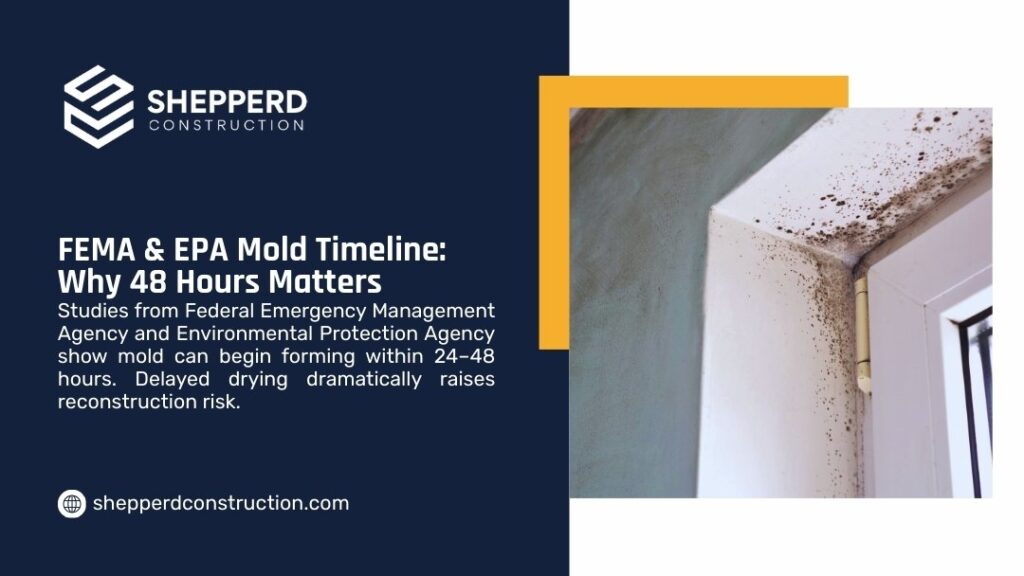
According to the Federal Emergency Management Agency (FEMA), moisture intrusion that remains untreated for 24 to 48 hours significantly increases the likelihood of mold growth and hidden deterioration. The Environmental Protection Agency also notes that mold infestation can begin within 48 hours in damp environments. Once moisture reaches that threshold, reconstruction becomes more likely than basic repair.
If drywall crumbles at the touch, floors feel uneven, or ceilings sag, those are no longer cosmetic concerns. That’s structural damage.
Key Indicators for Reconstruction
Not every water incident calls for tearing walls open. But certain warning signs move the situation beyond patchwork and into reconstruction territory. The distinction lies in material failure, not discoloration.
Here’s what separates manageable water damage from structural compromise.
When materials lose strength, when moisture lingers deep within assemblies, or when deterioration spreads across structural components, restoration alone won’t correct it. Reconstruction becomes the safer and more permanent solution.
The following indicators help determine whether water damage requires reconstruction rather than simple repair.
| Indicator | What It Means | Why Reconstruction May Be Required |
| Structural wood feels soft or brittle | Moisture has penetrated the framing | Load-bearing capacity may be reduced |
| Ceiling sagging or bowing | Water saturation above the drywall | Framing or fasteners may be compromised |
| Repeated water stains in the same area | Ongoing water source or trapped moisture | Internal cavities are likely damaged |
| Warped or cupped flooring | Subfloor expansion from excess moisture | Subfloor replacement is often necessary |
| Mold growth beyond the surface area | Prolonged hidden water damage | Wall assemblies may require removal |
| Insulation remains damp after drying attempts | Moisture trapped behind surfaces | Interior cavities must be opened |
| Cracked or separated exterior cladding | Water infiltration behind the envelope | Envelope reconstruction may be needed |
These indicators don’t operate in isolation. One minor sign might not justify reconstruction. But when multiple conditions appear together, such as warped floors combined with a musty smell in house interiors and visible signs of water damage in walls, the probability of more serious structural damage increases significantly.
Water damage can lead to decay that spreads quietly. Structural lumber absorbs moisture over periods of time. If drying fails or the water source continues unchecked, wood rot fungi begin to weaken framing members. At that point, cosmetic fixes serve no purpose.
The key takeaway is this: reconstruction becomes necessary when the building’s strength, not just its appearance, has been affected. And that’s why understanding these indicators matters before deciding on repair alone.
Why Some Water Damage Is Only Surface Level
Not every stain signals disaster. In many cases, water exposure is brief, localized, and fully dried before materials begin to deteriorate. A small roof drip that leaves a faint discoloration but does not soften drywall or affect framing may qualify as cosmetic damage. When the water source is identified quickly and corrected, such as a loose flashing detail or a minor plumbing leak, the impact often remains confined to finish materials.
Here’s what separates surface damage from structural concern. Surface-level damage typically affects paint, texture, or a thin layer of drywall paper. The substrate beneath remains solid. There is no swelling, no crumbling, no separation from framing. Moisture readings return to normal once drying is complete. There are no ongoing signs of moisture in walls, and no persistent musty smell in house interiors.
Old water damage can fall into this category if it occurred months or years ago, fully dried, and left no deterioration behind. In these cases, restoration focuses on sealing stains and replacing limited finishes. Structural components remain intact. Flooring does not warp. Ceiling assemblies do not sag. The damage was inconvenient, but not destabilizing.
However, verification matters. Professional water damage restoration teams confirm dryness through calibrated meters rather than guesswork. If readings show no excess moisture and materials retain their strength, reconstruction is unnecessary. That distinction protects property owners from overbuilding while ensuring safety.
Hidden Water Damage That Signals Reconstruction
Surface calm can conceal internal failure. Water follows gravity and capillary paths, spreading behind finishes long before it becomes visible. When insulation holds moisture, when framing absorbs repeated exposure, or when air cavities trap humidity, deterioration begins quietly.
Hidden water damage often reveals itself indirectly. Warped flooring, nail pops, recurring discoloration, or persistent odor suggest moisture remains trapped within assemblies. Here’s how concealed damage typically presents during a professional assessment.
| Hidden Indicator | What It Suggests | Likely Action |
| Repeated staining after repaint | Ongoing intrusion or trapped moisture | Investigate the wall cavity |
| Warped floors or cupping | Subfloor saturation | Partial floor reconstruction |
| Soft drywall at the lower edges | Capillary absorption from below | Remove and replace the section |
| Persistent musty smell in the house | Moisture retention within insulation | Open the wall for inspection |
| Efflorescence on masonry | Chronic water migration | Envelope evaluation |
When these indicators appear together, knowing if water damage requires reconstruction becomes less ambiguous. The presence of concealed saturation often means structural components have already endured prolonged exposure. Addressing only visible surfaces leaves decay untouched. Reconstruction restores integrity by removing affected materials entirely.
Structural Integrity: The Real Deciding Factor
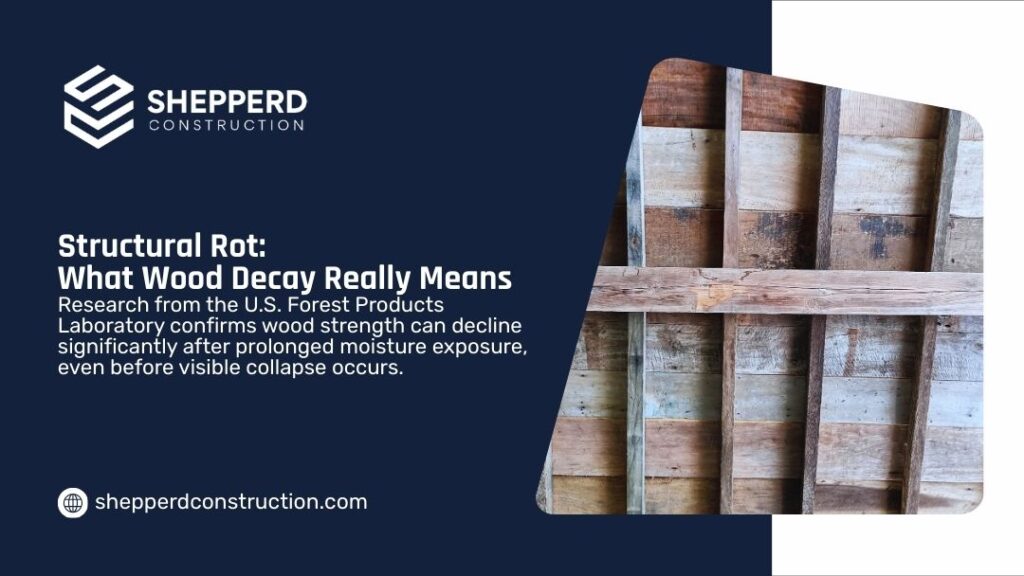
Cosmetic damage affects appearance. Structural damage affects safety. The distinction is not subtle once framing or load-bearing elements weaken. Water compromises wood fibers, corrodes metal connectors, and reduces the strength of engineered components over periods of time.
Professionals evaluate not just moisture content but also mechanical performance. A ceiling may appear intact while joists above have softened. Floors may look level while support beams deteriorate below. When structural capacity declines, patchwork repairs fail to address risk.
| Structural Component | Risk from Prolonged Moisture | Reconstruction Required? |
| Load-bearing studs | Rot, compression loss | Often yes |
| Roof trusses | Connector corrosion, wood decay | Yes if compromised |
| Subfloor panels | Delamination, sagging | Usually yes |
| Steel framing | Rust and section loss | Yes, if corrosion advanced |
| Concrete slab | Surface spalling only | Rarely unless severe |
How to know if water damage requires reconstruction often hinges on whether structural integrity remains intact. If core components can no longer perform as designed, reconstruction becomes the responsible solution. A restoration company may dry surfaces, but structural failure demands material replacement.
Mold Growth and Excess Moisture: When Repair Isn’t Enough
Mold does not grow without sustained dampness. Its presence often indicates that moisture has remained long enough to affect internal materials. While minor surface mold may be cleaned, the widespread presence of mold within cavities suggests deeper saturation.
Excess moisture trapped inside insulation, behind vapor barriers, or within framing provides ideal conditions for microbial spread. The EPA notes that mold colonization can occur within 24 to 48 hours under damp conditions. When colonies extend beyond surface finishes, remediation alone cannot resolve the issue. The Centers for Disease Control and Prevention confirms that persistent dampness increases the risk of respiratory issues and material breakdown.
If air sampling reveals elevated spore counts or visible growth appears inside structural cavities, reconstruction removes contaminated materials entirely. Water damage can lead to mold infestation that penetrates porous components such as drywall and wood. Once that occurs, partial cleaning leaves residual contamination.
How to know if water damage requires reconstruction in mold-related cases depends on depth, distribution, and structural involvement. Surface growth suggests repair. Embedded colonization signals replacement.
Water Damage Severity Comparison
Visual symptoms alone rarely tell the full story. Context and progression determine severity. The following comparison clarifies how symptoms correlate with repair versus reconstruction decisions.
| Condition Observed | Likely Repair | Likely Reconstruction |
| Light water stain on the ceiling, dry to the touch | Yes | No |
| Recurring water stain on the ceiling, old or new | Unlikely | Likely |
| Musty smell in the house after drying | Rare | Often |
| Warped floors or sagging subfloor | No | Yes |
| Mold is limited to the surface of the drywall | Possibly | Depends on depth |
| Mold inside wall cavities | No | Yes |
A stain may appear minor at first glance. Yet, if how to tell if the ceiling has water damage involves noticeable sag or deflection, structural compromise may already exist. The difference lies in whether the water affected only finishes or penetrated supporting systems.
Professional Assessment: What Experts Evaluate
Professionals don’t rely on sight alone. They measure moisture content, examine structural members, and assess the duration of exposure.
Here’s how it works. Moisture meters detect saturation levels beyond what you can see. Infrared cameras reveal temperature differentials that suggest hidden water damage. Core samples confirm whether structural damage has begun.
In commercial or HOA properties, reconstruction contractors review building envelope integrity as well. If you manage multifamily housing or municipal property, experienced teams such as Shepperd Construction understand how to coordinate investigation with long-term restoration plans.
In cities like Austin or Fort Worth, property managers often consult Reconstruction Contractors Austin or Reconstruction Contractors Fort Worth when structural compromise becomes likely.
Cost and Insurance Considerations
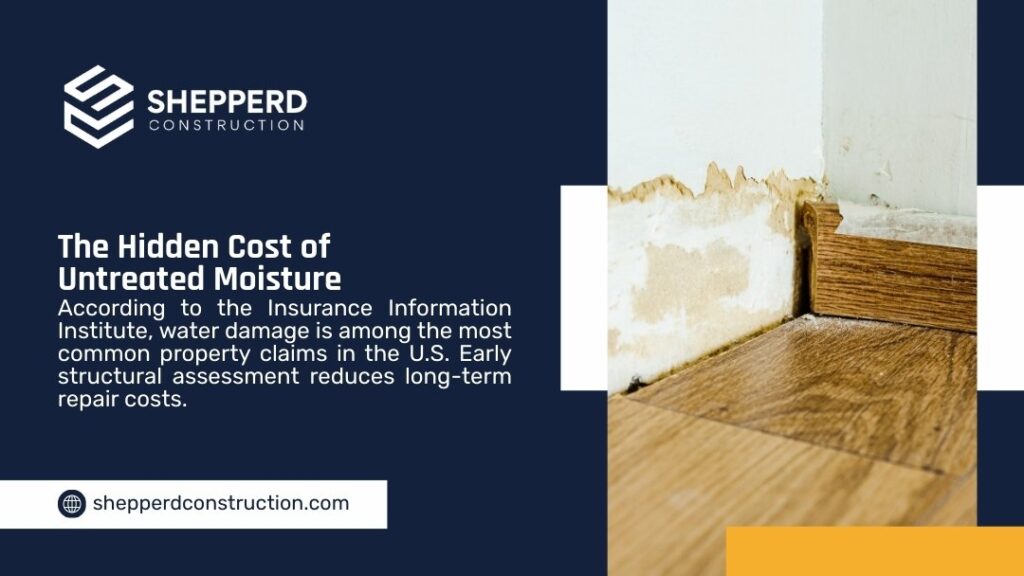
Financial implications often influence decisions, yet insurance policies rely on documented evidence. Carriers examine whether swift action occurred and whether structural damage resulted from neglect or sudden events such as a burst pipe.
Insurance adjusters frequently differentiate between mitigation and reconstruction. Documentation, moisture readings, and professional reports support claims. Delay can shift costs to the property owner.
| Scenario | Insurance Outlook | Financial Impact |
| Immediate drying after a leak | Often covered | Lower cost |
| Undetected leak for months | Coverage disputed | Higher expense |
| Burst pipe with rapid response | Typically covered | Moderate |
| Chronic roof leak ignored | Limited coverage | Significant reconstruction |
| Mold infestation after a delay | Coverage varies | Elevated remediation cost |
Understanding how to know if water damage requires reconstruction can reduce disputes. Early evaluation preserves documentation and protects financial interests.
Severity Timeline
Time plays a decisive role. Materials respond differently depending on the duration of exposure. Even minor leaks escalate if ignored.
| Exposure Duration | Typical Outcome |
| Under 24 hours | Drying and repair |
| 24–48 hours | Mold risk begins |
| 3–7 days | Material breakdown possible |
| Weeks | Structural damage probable |
| Months | Major reconstruction likely |
Swift action prevents escalation. Excess moisture left unchecked transitions from cosmetic concern to structural threat. The longer saturation persists, the more likely reconstruction becomes necessary.
Commercial and HOA Considerations
For larger properties, the threshold shifts. If a commercial building experiences repeated envelope leaks, repair may not address systemic failure. In those situations, review of envelope assemblies and phased reconstruction becomes necessary.
Teams specializing in Reconstruction Areas of Service across Texas evaluate not only visible damage but also overall building performance. Multifamily condominiums, senior living centers, and municipal buildings often require coordinated reconstruction strategies rather than piecemeal fixes.
For HOAs wondering who is responsible for reconstruction after a disaster in an HOA, governing documents and insurance structures usually dictate responsibility. Yet the decision whether repair suffices still hinges on structural findings.
When Repair Isn’t Enough: Take Decisive Action
Water damage rarely announces how serious it is. It whispers at first. A faint stain. A slight odor. A floor that feels uneven. Ignore it, and structural damage follows.
Knowing how to know if water damage requires reconstruction comes down to recognizing when structural integrity, not just appearance, has been compromised. If moisture lingers, if mold persists, if framing softens, reconstruction restores safety and value.
If your property shows signs beyond surface repair, consult experienced professionals. Early assessment prevents more serious damage and protects long-term performance. Because when repair isn’t enough, reconstruction isn’t optional. It’s necessary.